Hemlock Woolly Adelgid is an invasive pest that leads to dieback of hemlock trees. There is ongoing research through Cornell University showing signs of early success for the biological control of HWA eating insects.
Eastern Hemlock
Eastern hemlocks are one of the most important tree species in New York State. While having some timber value, these trees provide immense ecological and recreational benefits. Hemlocks are great at preventing erosion and are well suited for habitats near water sources. Because of how closely they grow together naturally in the forest, their dense root structure helps stabilize stream banks. Hemlocks growing near streams and rivers cast shade on the water, lowering its temperature. This is preferred habitat for cold-water fish, such as trout. When hiking in the forest these trees create a microclimate underneath that provides great spots to take breaks on hot summer days. Hemlocks are iconic trees throughout the state, and are now under threat by an invasive species: Hemlock Woolly Adelgid.
What is Hemlock Woolly Adelgid (HWA)?
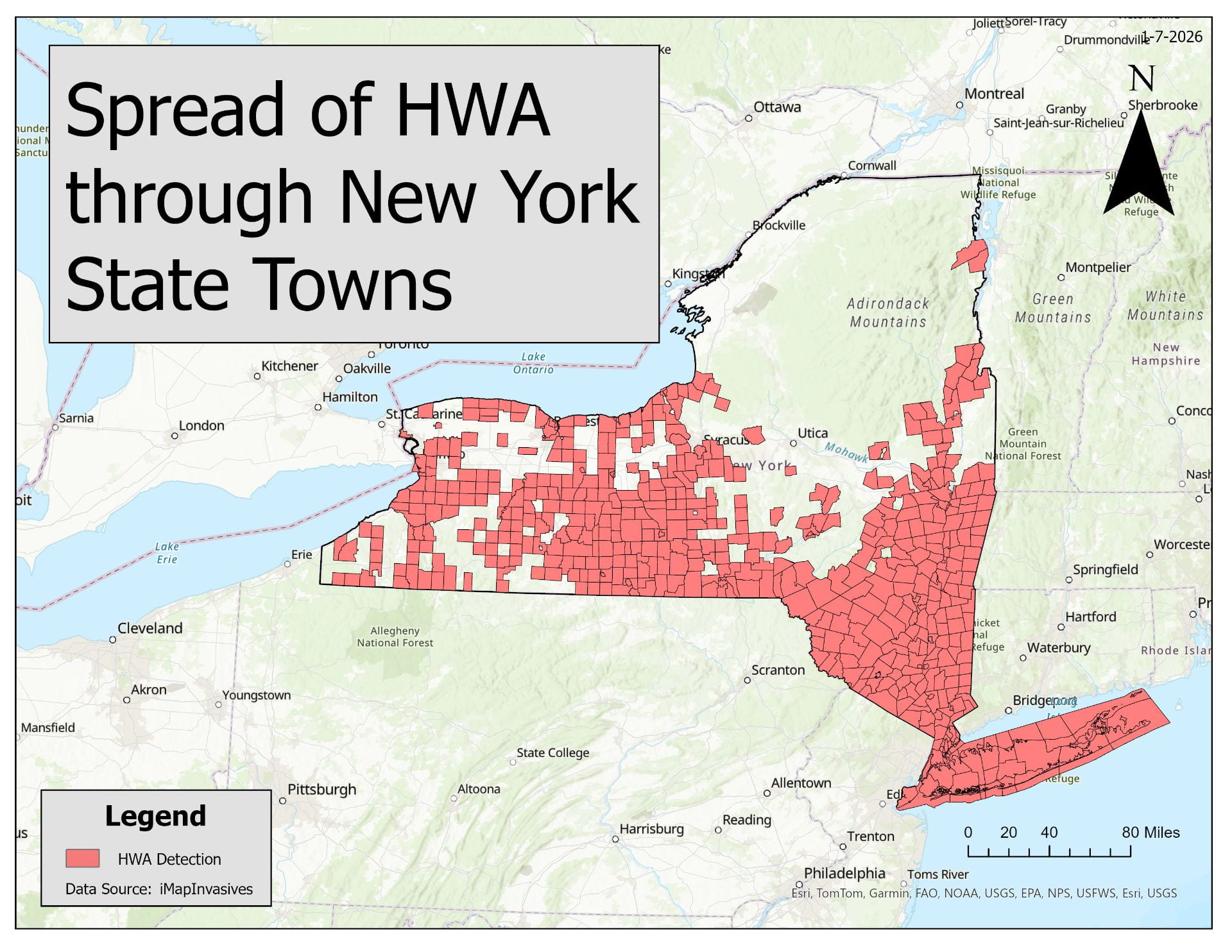
The Hemlock Woolly Adelgid was introduced into the United States in 1924 (in NY since the 1980s) from southern Japan. It attacks both the Carolina and Eastern hemlock and is capable of severely weakening and killing its host plants. HWA also attacks Western hemlock, but it is more resistant to the pest. Healthier plants, prior to infestation, may endure longer but previously stressed plants may die in 3-5 years. The key to its management is to recognize it early and implement proper control strategies.
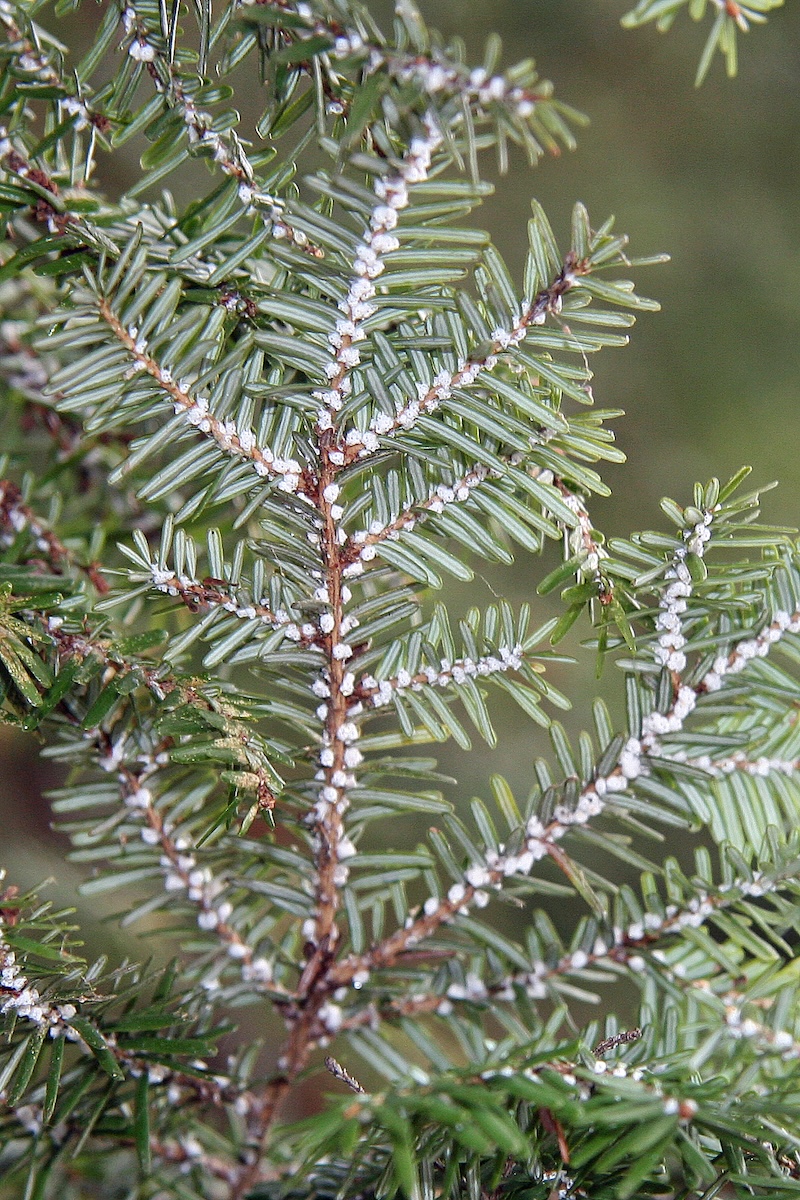
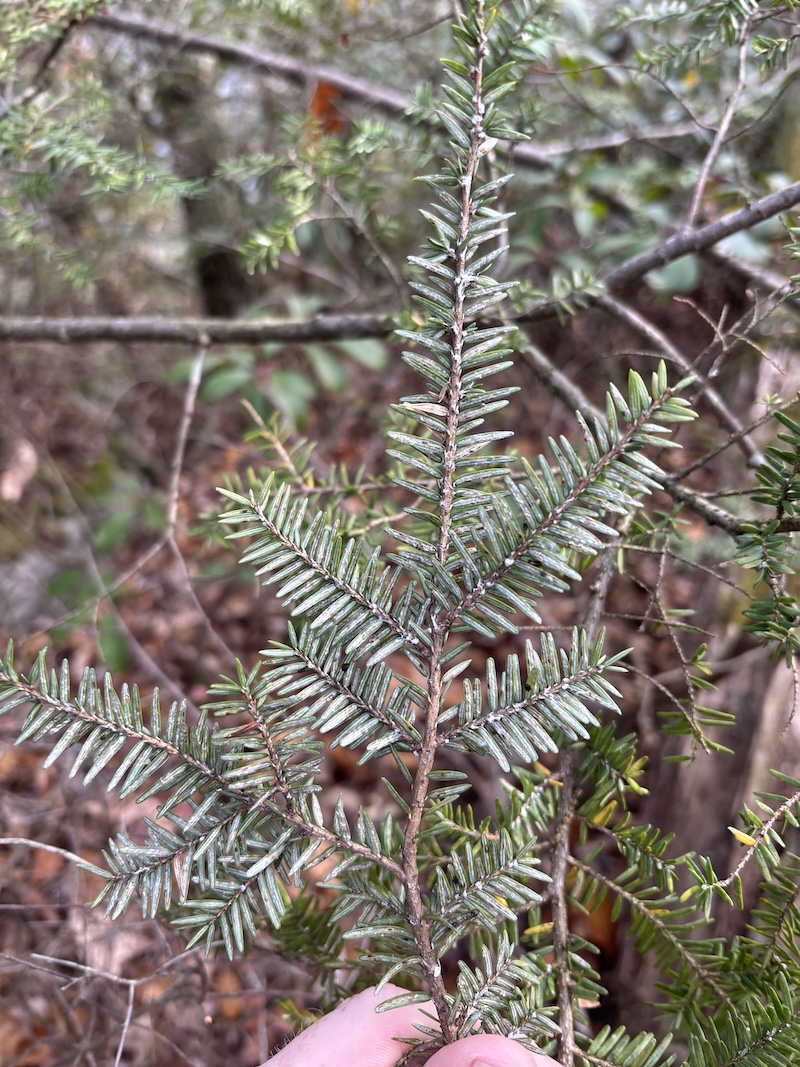
The Hemlock Woolly Adelgid is an aphid-like insect that has a piercing-sucking mouthpart. The insect feeds on the twigs and secretes a wax-like substance (resembling wool) that acts as insulation for the HWA for colder months. This “wool” also provides a home for the insects eggs when they’re laid in the spring. HWA enters dormancy during the summer. The insect reproduces asexually and two generations reproduce each year. The pest reproduces rapidly, to the point where their feeding completely overwhelms the tree. This leads to the hemlock dropping needles due to stress, and eventual death for the tree.
How to stop Hemlock Woolly Adelgid (HWA)?
There is a way to halt HWA, though unfortunately it is expensive making it not commercially feasible to use across the landscape.
Two insecticides are commonly used to control HWA
- Imidacloprid – slower acting but provides long-lasting protection
- Dinotefuran – faster acting but offers shorter protection
The following are common treatment methods
- foliar (spraying the needles)
- basal bark (spraying the bark)
- soil drench (applying to the soil)
- stem injection (drilling and injecting into holes in the base of the tree)
Using chemical treatments can be a great way to save individual trees that hold significance to you and your family, or to save hemlocks in particularly sensitive areas. Some examples of sensitive areas would be on steep hillsides where there is a high risk of erosion, and it would be helpful to keep those roots holding the soil together or hemlocks surrounding a pond or other waterbody to help regulate the water temperature. Research has shown that these chemicals protect the hemlocks for 5 years following treatment before another treatment is needed.
Fortunately, in our fight for the hemlock there is another large factor in play.
New York State Hemlock Initiative
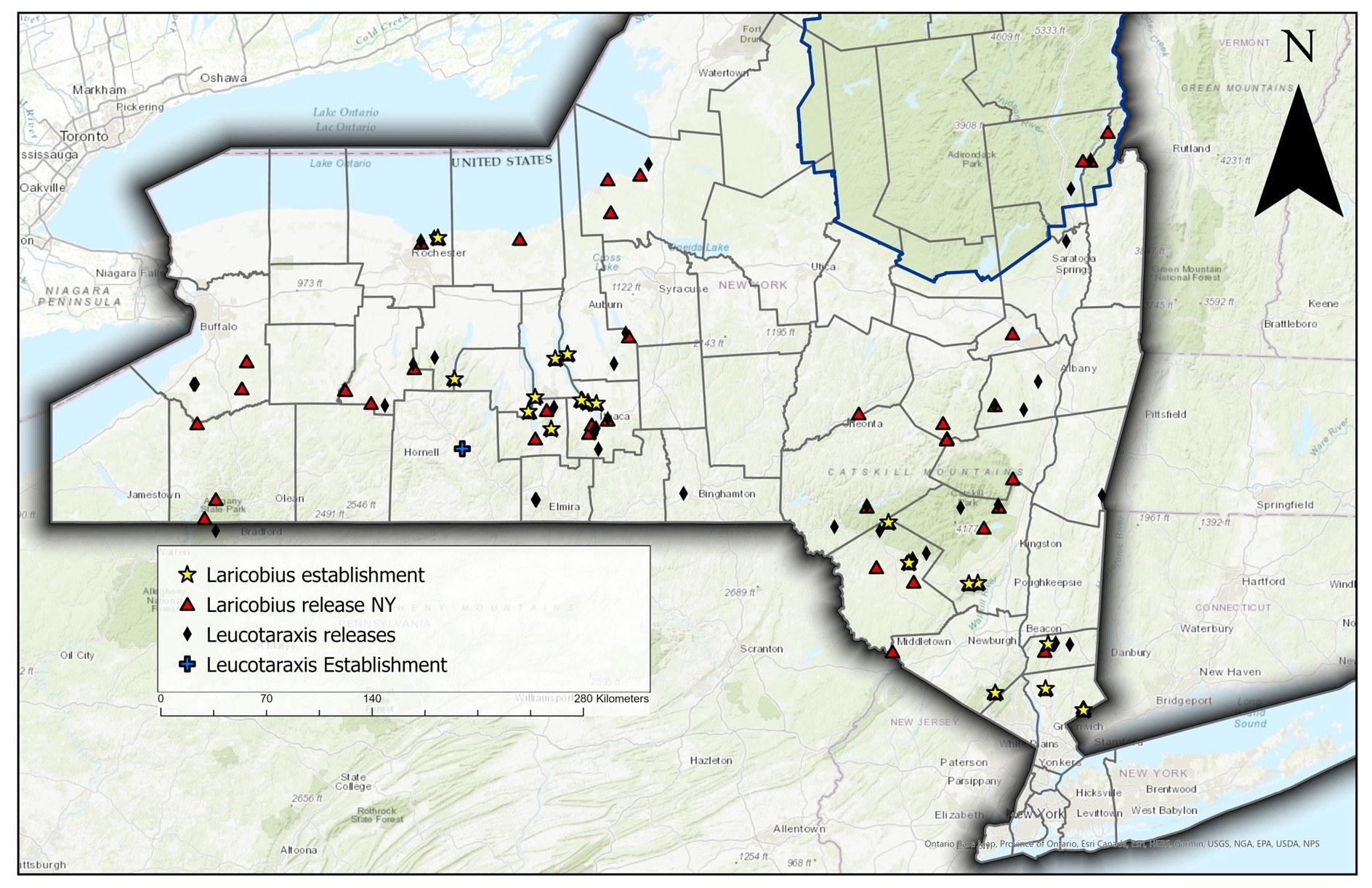
The New York State Hemlock Initiative, a Cornell University project, has been researching and utilizing biological control for HWA. They are using 2 different species of silver flies (Leucotaraxis argenticollis and Leucotaraxis piniperda) and a beetle species (Laricobius nigrinus) that primarily consume HWA. These insects are collected from the west coast, where they feed on HWA on western hemlock. They are reared and studied in a lab at Cornell University and then released into the forest at the best point in the insect’s life cycle. The Hemlock Initiative has been researching and tracking both the impact and establishment of populations of these predators since 2017, though the beetles have been released at 21 sites in New York since 2008. There are currently populations of the beetle and silver flies that have been released and found over the following years, showing that these populations are established, able to survive through the winter, and are helping to control the invasive HWA. In 2025 alone, more than 18,902 silver flies and 6,000 beetles were released across New York State.
One example of a recent amazing New York State Hemlock Initiative success was at the Harriman State Park release site in Southfields, NY. Between 2018 and 2020, the Hemlock Initiative released 2,249 Laricobius beetles in this site. In 2025, a crew returned to the site to survey the establishment of these insects. Using white beating sheets, the crew was able to collect 12,676 of the beetles over just 3 days in the field. These collected beetles were then distributed across New York, New Hampshire, and Vermont to further establish new colonies of HWA eating beetles across the Northeast.
The future of Hemlock Woolly Adelgid (HWA)
It is highly unlikely that any one method of control for this pest will completely eradicate it from the landscape. The New York State Hemlock Initiative has had many successes that prove that biological control works, but the scale of control needed to control the totality of the pest’s spread is a huge challenge that crosses state lines. In the meantime, biological control may be able to slow the spread of HWA or even help to eliminate light infestations. The Hemlock Initiative is conducting a plethora of ongoing research studying how effective biological control is.
In the meantime, to protect key hemlock individuals on your property, chemical treatment is still the best path forward. But there is hope for the forested landscape that there is something standing in the way of the spread of Hemlock Woolly Adelgid.
The New York State Hemlock Initiative provides frequent updates on their research, which can be found here - New York State Hemlock Initiative