Five days, one watershed, over two dozen inspired educators. WFIT 2025 brought together teachers from across the NYC Watershed to explore water, forests, and community while rekindling the joy of learning outdoors.
The biggest hoorah of the Seasonal Watershed Forestry Educator position is getting to plan and attend the Watershed Forestry Institute for Teachers, more commonly referred to as “WFIT” (pronounced whiff-it). After applications are assessed and orientation is completed, teachers from across the New York City Watershed physically congregate in Cold Spring, New York for five summery days of educational watershed-focused fun. The real goal? To teach them about the New York City Watershed from an array of unique perspectives and help them find ways to integrate it into their curricula.
With WFIT 2025 now officially in the history books, I want to take a moment to reflect on all that was, as well as all there is to look forward to.
The Location
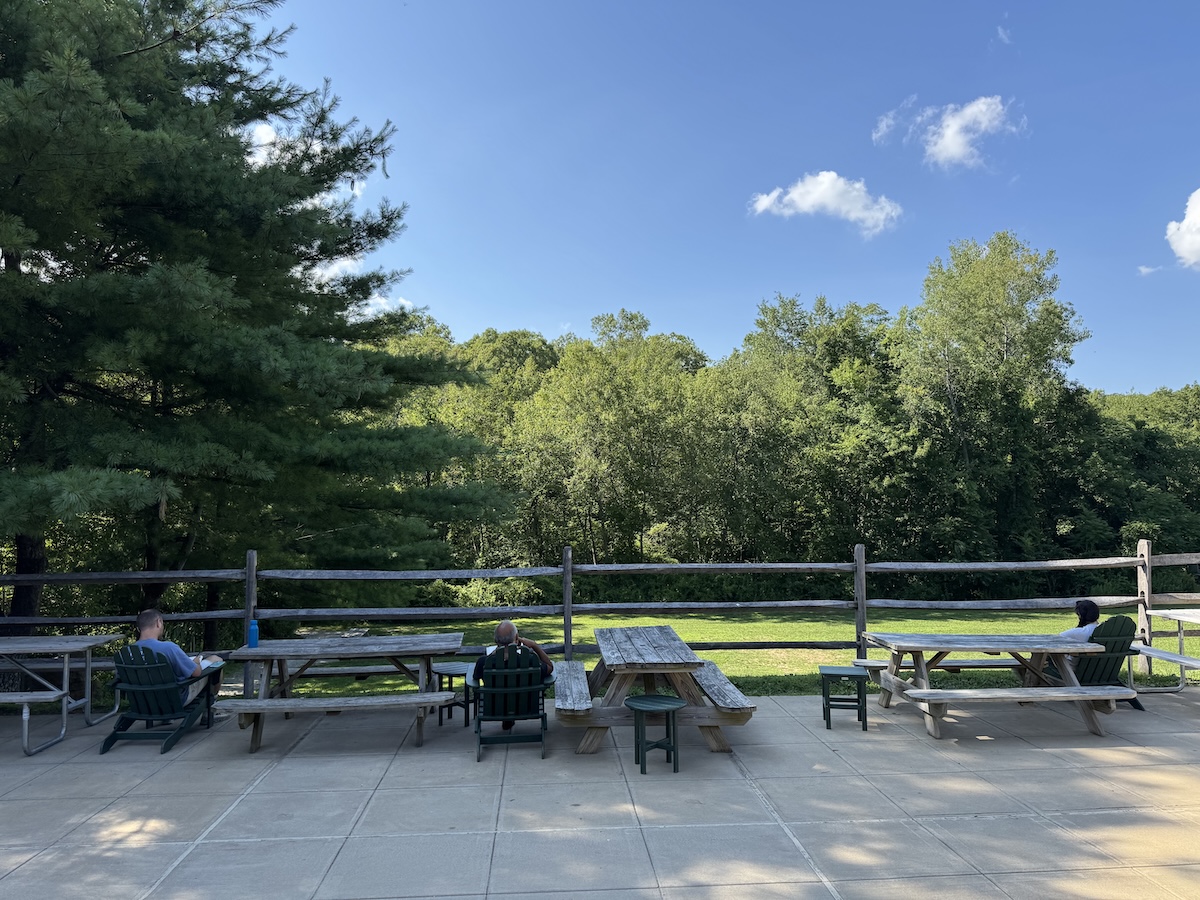
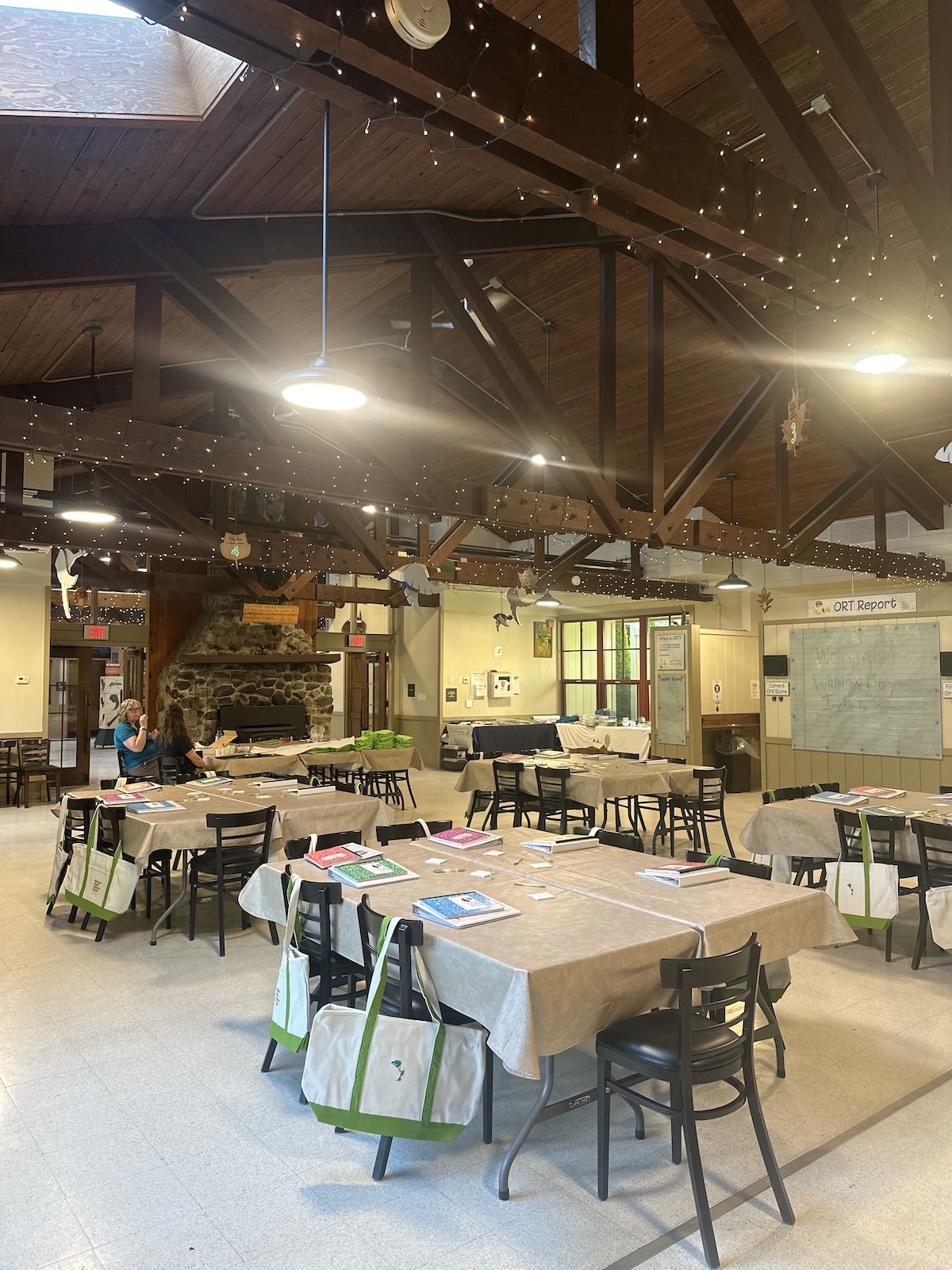
For over a decade, WFIT has taken place at the Taconic Outdoor Education Center (TOEC), located in Clarence Fahnestock Memorial State Park. As the only residential education center in a New York State Park, the center boasts a variety of outdoor-focused activities for people of all ages. Equipped with cabins, a lodge, a cafeteria, interactive exhibits, hiking trails, and a pond, it was the perfect place to re-live the summer camp experience with a group of educators, which most fully embraced.
In the mornings, breakfast was preceded with self-started trail runs, bird watching walks, yoga, and early paddles. We fueled (and refueled) our long days with a variety of feel-good favorites, including blueberry pancakes, baked potatoes, home-made maple-tonic beverages, and cannolis. Even when evenings ran late, board games, campfires, star gazing, and nose-in-book downtime could still be seen happening across the center. By the end of the week, the fan-favorite feature was the onsite rope swing, which provided a couple hours of gravity-defying teambuilding fun. With the added presence of snapping turtles, leopard frogs, turkeys, and barred owls, TOEC was an ideal base to support the group as they learned about the interconnectedness of water, forests, and people.
The Activities
Drinking water is generally a complex topic, and New York City’s water supply, which serves millions, is an even more complex topic. That’s why WFIT’s five-day schedule is selectively built to blend field trips with interactive onsite workshops so that participants can explore water-related topics from multiple angles, including forestry, water quality, career development, hydrology, engineering, wastewater systems, indigenous history, ecology, erosion, land use, and even economics.
Recognizing that teachers (and their students) have diverse learning styles, WFIT also intentionally incorporates different visual, auditory, kinesthetic, interpersonal, and reflective learning styles throughout the program. The ultimate goal is to give every educator a variety of meaningful entry points so they can leave the program feeling confident about being able to integrate watershed content into their own classrooms, whether they teach Earth Science, English, or Wood Shop.
Here’s a look at just a few of the week’s highlights:
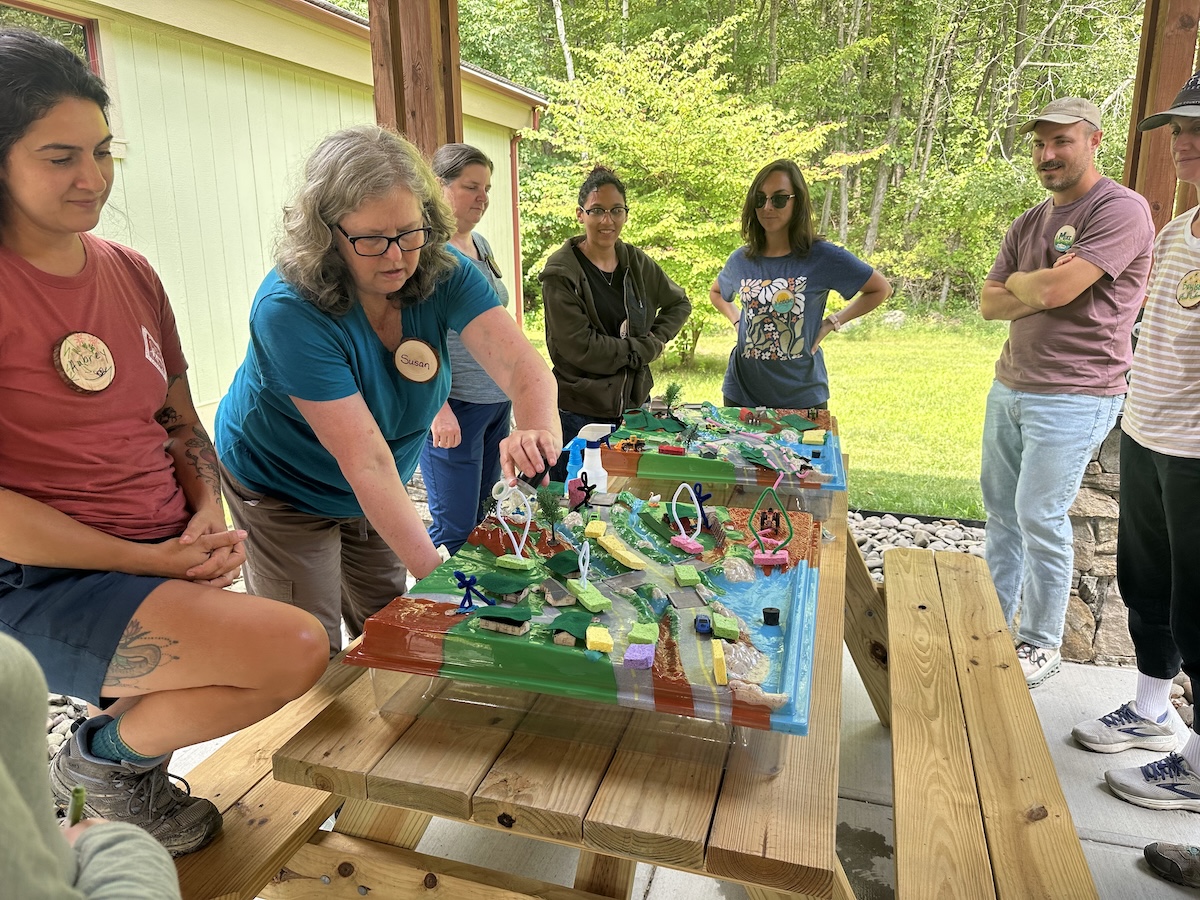
- Participants danced through the water cycle, crumpled paper to create 3D watersheds, and ran simulations on stormwater runoff and urban design to see how infrastructure choices impact water quality.
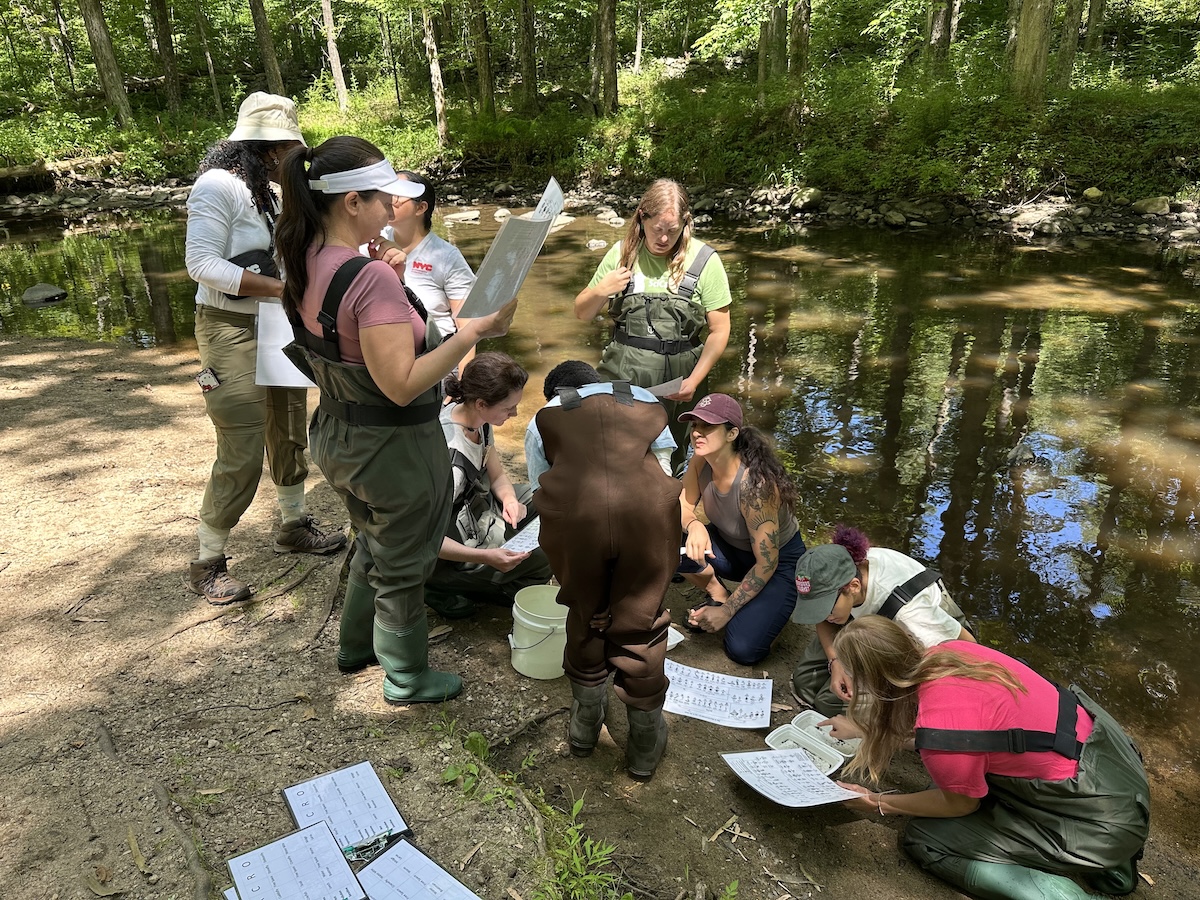
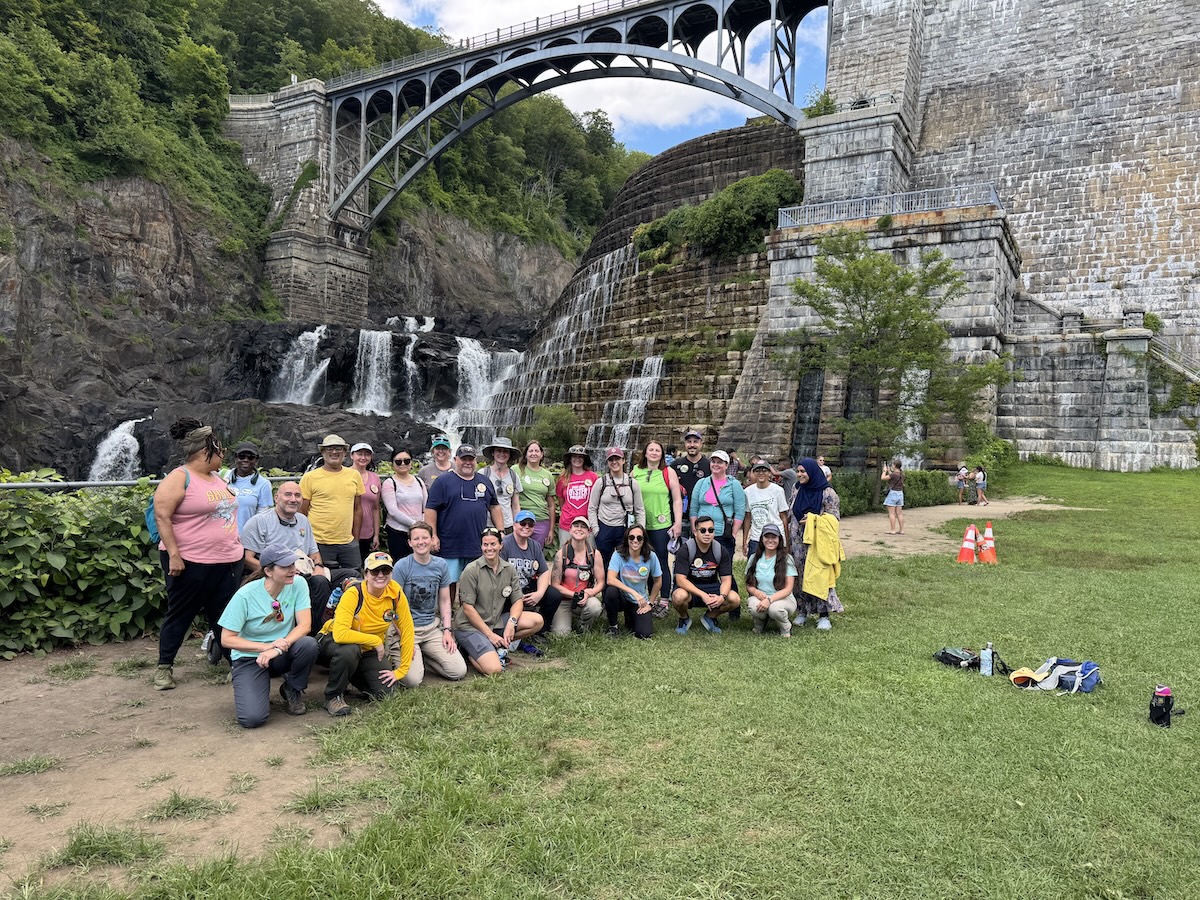
- A visit to Ward Pound Ridge Reservation deepened their understanding of forest filtration and included hands-on macroinvertebrate sampling. Meanwhile, at the New Croton Reservoir Dam, scale and engineering took center stage.
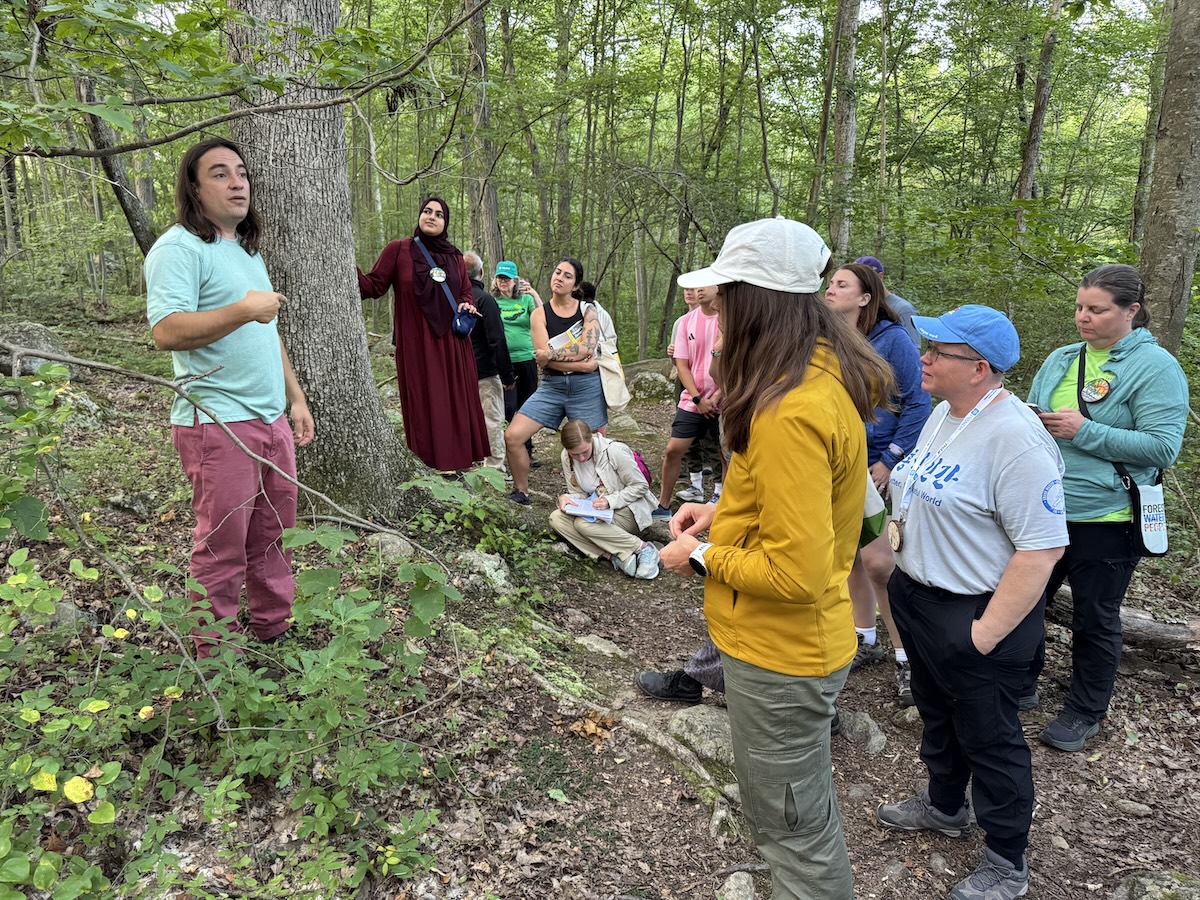
- At a model forest, participants discussed the use of trees to soften their view of timber harvesting and see forestry as a tool for sustainability. Later on, a guided indigenous forest walk connected attendees to plants that were once well integrated into the food we ate and the medicine we used.
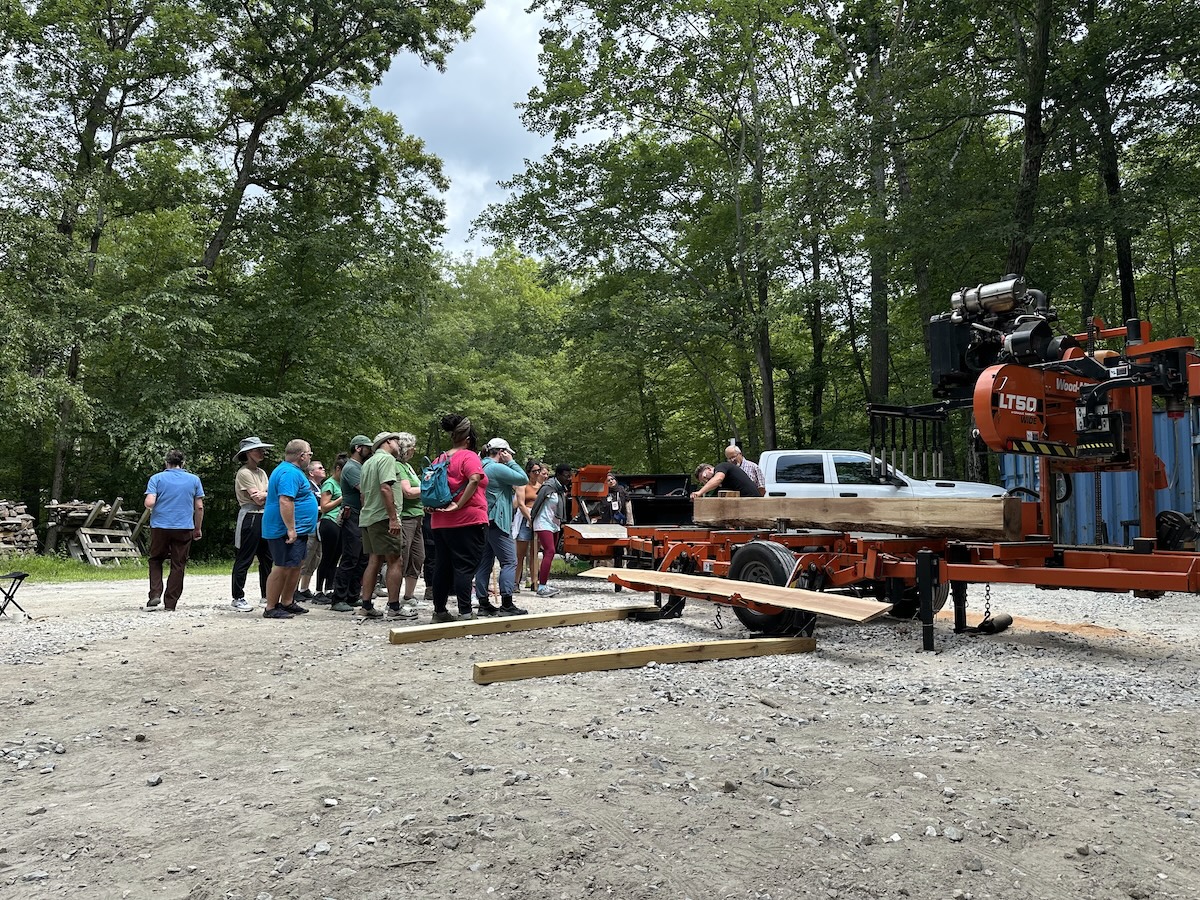
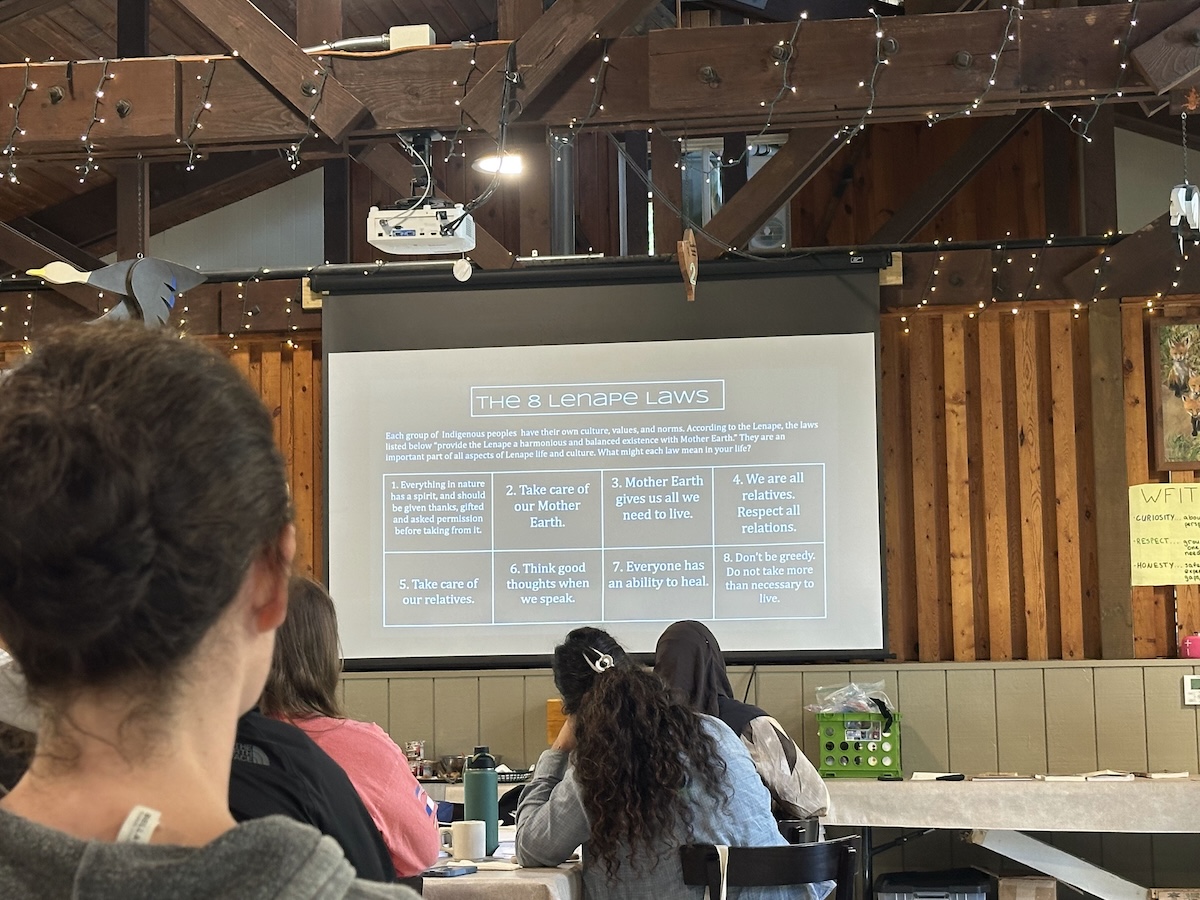
- A deeper dive into the Lenape people’s history emphasized the need to unsettle and honor Native survivance, followed by a portable sawmill demo offering a practical look at how forests can be managed for both ecological and economic benefit.
The Community
Teachers are underpaid, overworked, and often under-resourced, especially in many lower-income NYC schools. On top of this, they face daily challenges like device distraction, declining literacy, and difficult home situations. Knowing this makes the emotional impact of WFIT’s closing ceremony all the more powerful. Two participant reflections really stood out:
“Within just a few hours, the facilitators were able to create such a safe and inclusive environment that I never felt unwelcome to ask a question or start a conversation.”
“Even though it isn't always in our job description, a lot of what we do involves taking care of other people. This week I felt like I was being looked after, thought of, and supported for a change, and that was a really nice feeling.”
Throughout the week, appreciation, vulnerability, and joy flowed freely. Yes, being surrounded by nature helps, but WFIT’s real magic is the people; educators who show up curious, open, and ready to learn. From sharing cabins and pitching shark tank inventions, to small group reflections and miscellaneous activity challenges, the week grew a sense of camaraderie and togetherness that has all but gone missing from our day to day lives.
How often do you get to look for insects, roast marshmallows over a camp fire, discuss the impacts of capitalism, or cheer on a new friend as they conquer their fear of heights? For all that WFIT does to both inform and equip educators on watershed and forestry related themes, it also helps them lower their shoulders and remember not only the human connection, but the irreplaceable value they hold for their students and communities.
The Future
WFIT 2025 may be over, but we know it is not the last. As the twenty-fifth gathering to date, there is no end in sight for a program working hard to spread awareness on the importance of healthy forests for not only our water, but for our air, our resources, our health, and the planet’s biodiversity.
In a few months, we will check in with our list of attendees to see how it all played out: Are they well? Have they been able to incorporate material? Did we forget to share any important resources? Likely we will see many of the same faces again, along with their cohort of students, at one of our field trips or workshops offered throughout the year. But we also may see one of their friends, coworkers, or distant connections, who heard through the grapevine of a quirky opportunity to gather with strangers, build a community, and learn about why protecting what's left of the natural world is not a choice, but a necessity.
If you are a teacher and interested in a future WFIT - check out the WFIT webpage.