I was doing some deer scouting in early October and I found myself on the edge of a Norway spruce stand. I was following a deer trail and slipping through the dead branches in the understory, when I noticed a spruce log decaying on the forest floor. There were wafer-thin wood strips laying around the log. I had never seen this before.
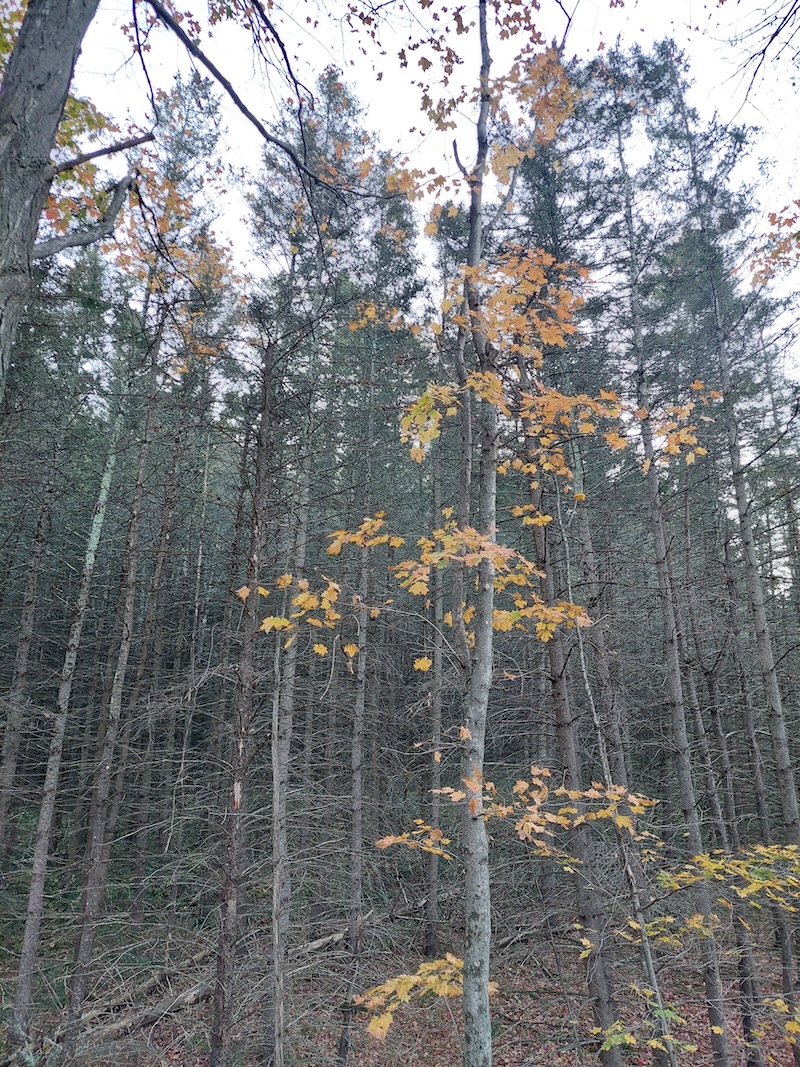
Norway spruce stand
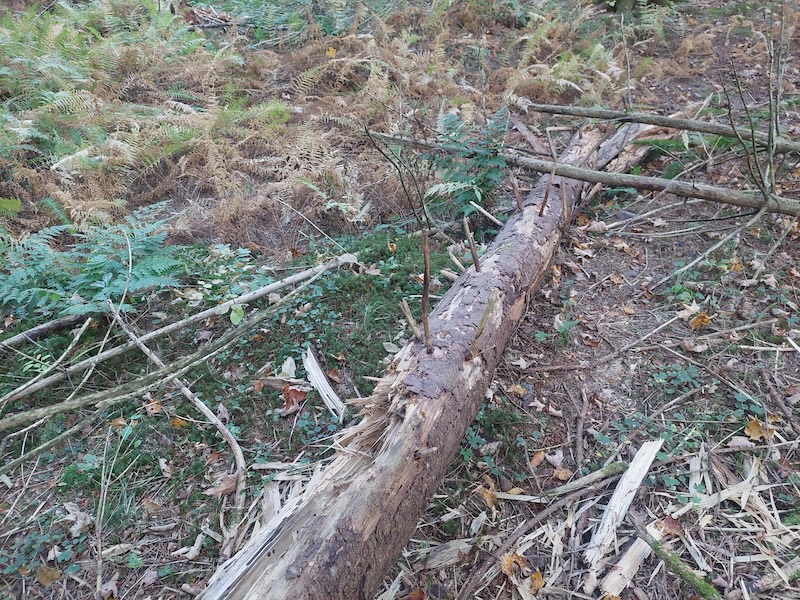
Spruce log decaying on the forest floor
I picked up a chunk of wood. It was so light in my hand! The thin strips and knots were all that remained. It was like the skeleton of a piece of wood.
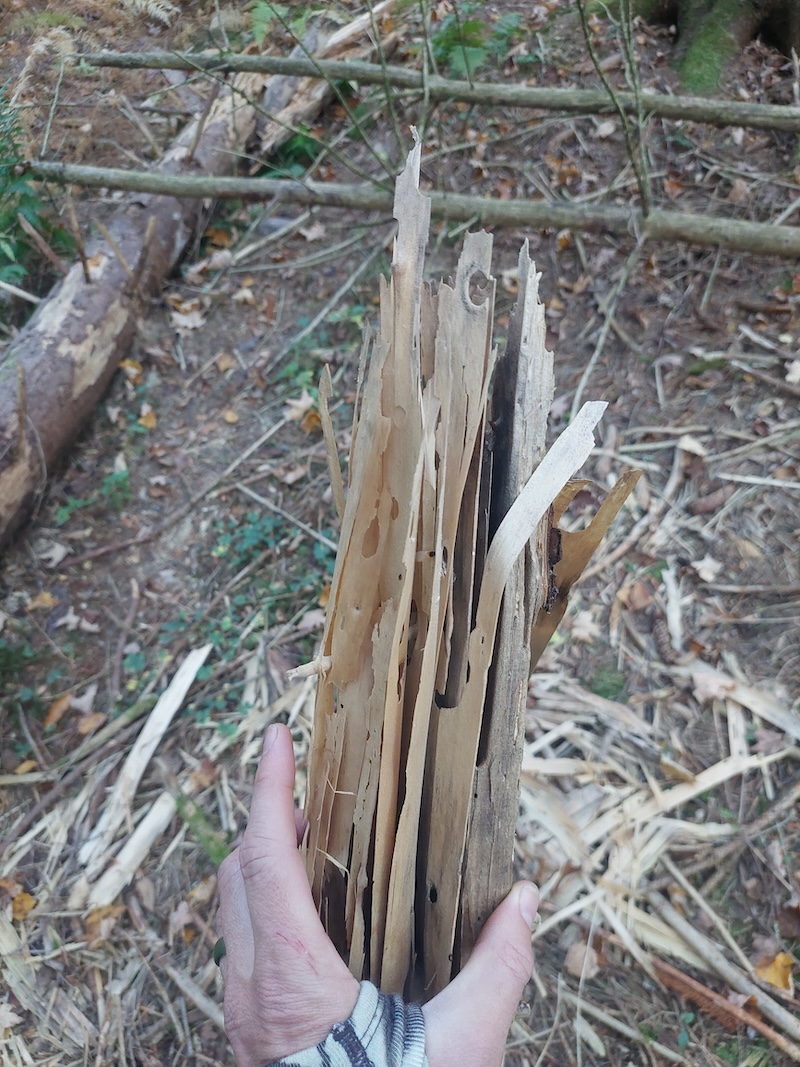
Chunk of decayed spruce wood
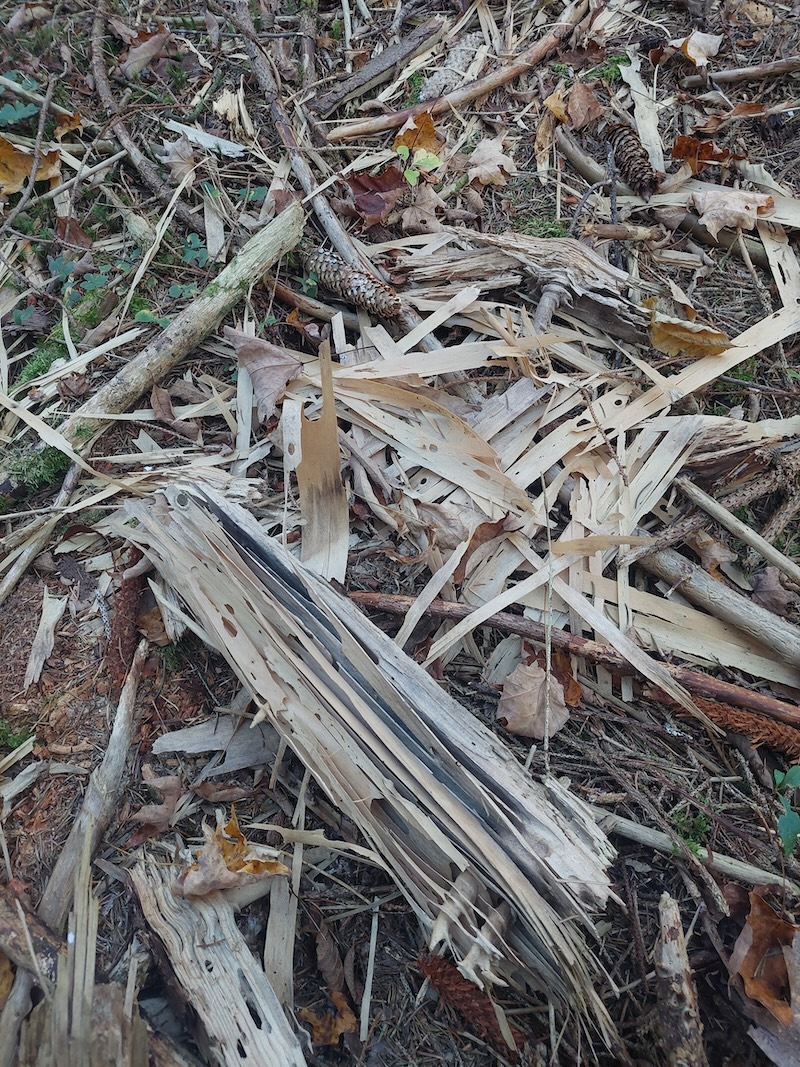
Thin strips of decayed wood. Can you spot the knots?
I inspected the inside of the main log. It looked like a critter had been hanging out in there. I saw a stripped spruce cone, probably from a red squirrel. I noticed holes in the wood from boring insects. There was sawdust-like material in the hollow section of the log.
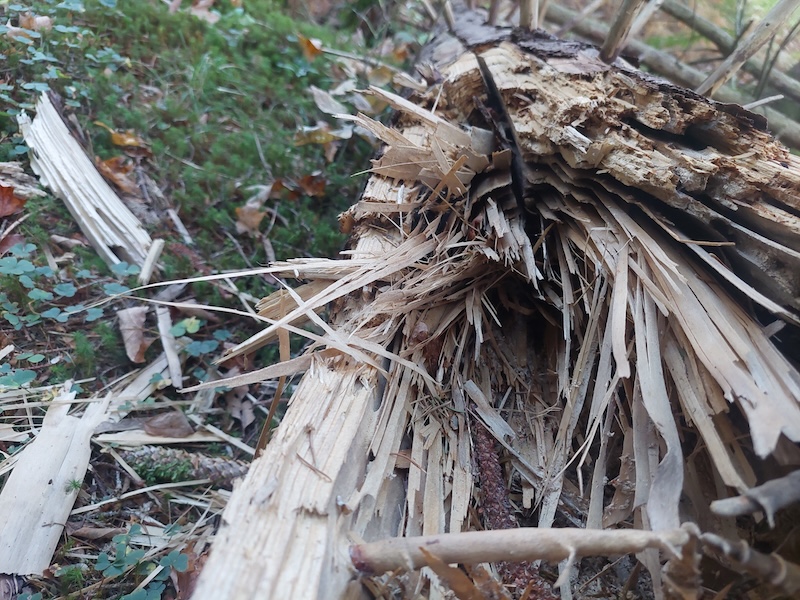
Cross section of the decaying log. Notice the radial nature of the strips at the center. Also, can you spot the stripped cones?
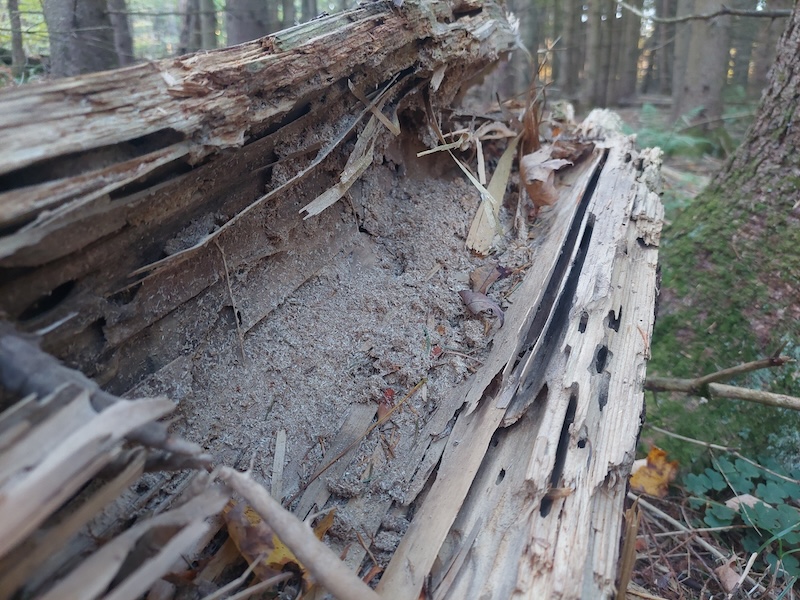
Hollow end of the log. Presumably where the chunk that I picked up came from. Notice the bore holes and sawdust-like material.
I wondered what caused the wood to rot in strips. Then I remembered Karl VonBerg’s blog called The Rotten Truth, where he talked about wood density as being a factor causing different rates of rot. Trees grow faster during the summer and slower during the winter. This causes tree growth rings. Faster-growing wood is less dense and rots more quickly. Could it be that these thin strips of wood are the denser, winter-grown wood?
If you look closely at the pictures above, you can see knots from tree branches running perpendicular to the thin strips. The knots are denser and rot at a slower rate.
I came across this website called Forest Pathology: Diseases of Forest and Shade Trees, where there is a page about wood decay. I learned that practically all wood decay is caused by fungi, most of which by basidiomycetes. Wood by weight is 50% cellulose, 25% hemicellulose, and 25% lignin. I learned about different types of wood decay: white rot, brown rot, and soft rot. White rot leaves a bleached color and fibrous texture. Sometimes with white rot, there is a thing called selective delignification, where lignin and hemicellulose are removed before the cellulose. Perhaps the thin wood strips I encountered were cellulose.
That’s about as far as I got with this mystery, but if you want to learn more, I’d encourage you to check out forestpathology.org. Thanks for reading.