We think we found a lingering ash tree at Frost Valley Model Forest.
On Sept. 10, 2025, a group of us, including Tracey Testo, Shane Stevens, Will McCall (Cornell Cooperative Extension of Columbia and Greene Counties), Dan Dechellis (Frost Valley YMCA), and myself (WAC Forestry) visited Frost Valley Model Forest. Our goals for the day were to re-measure three Assessing Vegetation Impacts from Deer (AVID) plots for the first time since they were established in 2021, establish a Monitoring and Managing Ash (MaMA) plot, and make a game plan for an upcoming landowner workshop at the model forest about deer impacts and management. To get up to speed on MaMA, check out this blog.
As I made the 14-mile drive along Ulster County Route 47 to reach Frost Valley Model Forest, I noticed many long-dead, but still-standing white ash trees along the road. The bark was falling off many of the trees in big chunks. This didn’t give me much hope for finding living ash trees to tag and monitor at Frost Valley Model Forest.
We used the East Entrance to the Model Forest, crossed the bridge over the West Branch of the Neversink River, and we marveled at the forest regeneration (much of it was yellow birch) in areas that had been harvested some 20 years ago and fenced in to exclude white-tailed deer. Unfenced areas had much more open understories with beech and fern being common.
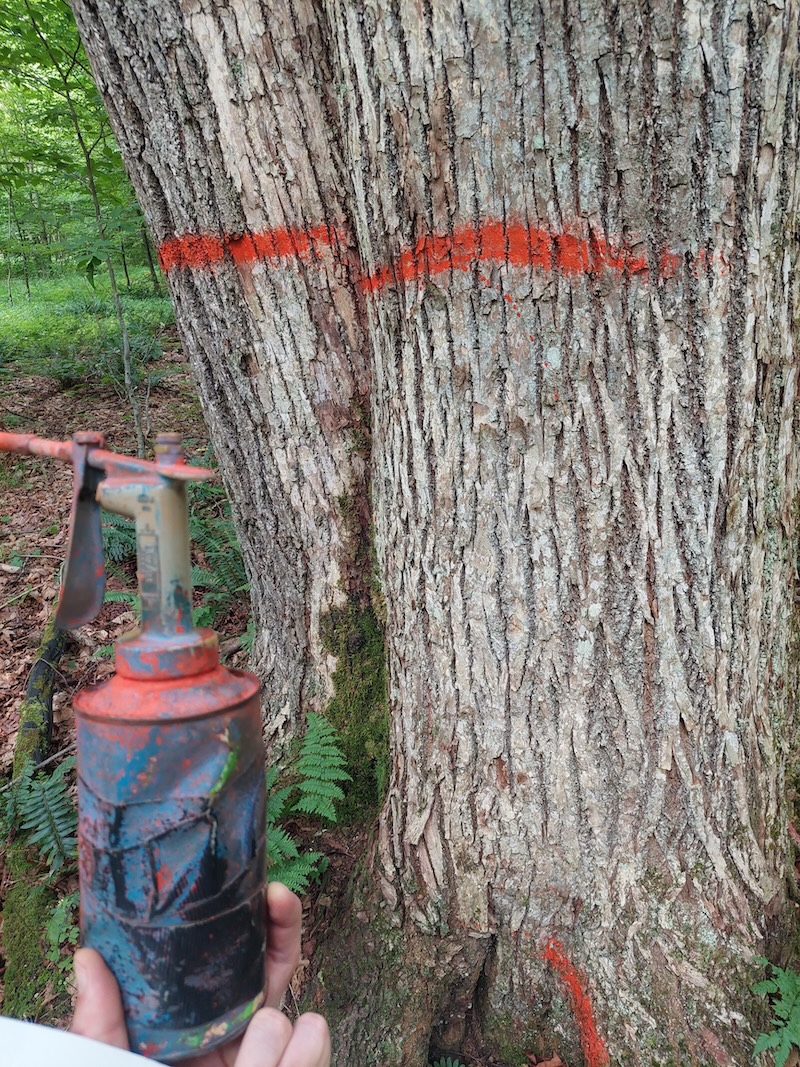
When we got to Compartment K, we found some mature ash trees. One of them looked healthy! It had a diameter at breast height (DBH) of 25 inches and a full crown. We didn’t see any definite emerald ash borer (EAB) sign.

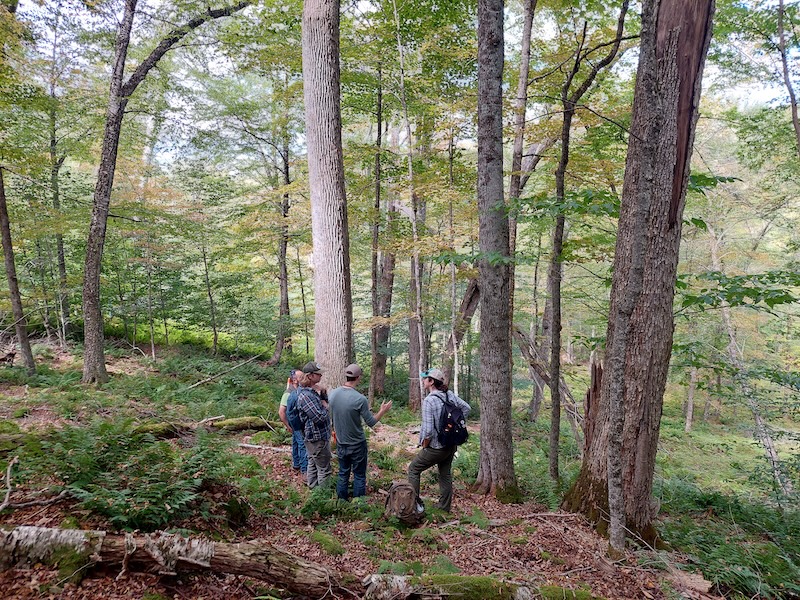
The big tree on the left (in the sunlight) is the healthy ash tree. The two ash trees next to it are dead.
There were 4 or 5 similar-sized ash trees that were dead and standing, called snags. Many of them had definite EAB signs, including D-shaped exit holes in, and serpentine galleries underneath the bark.
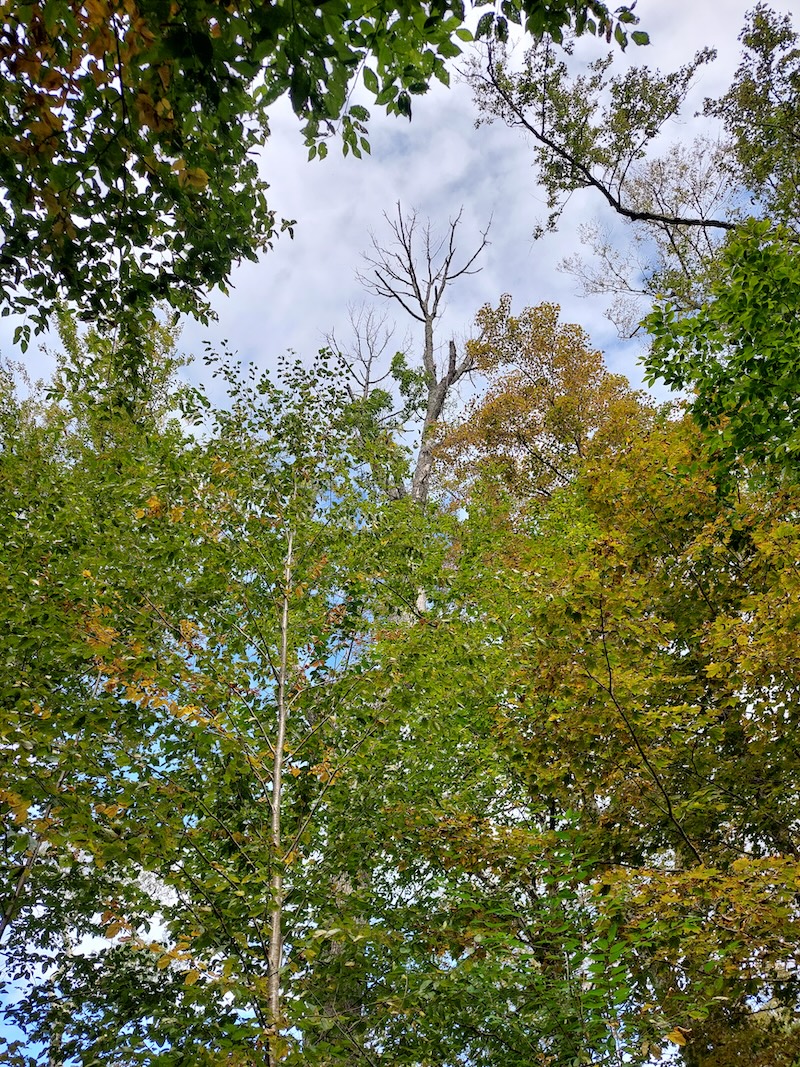
Bare top of an ash snag.
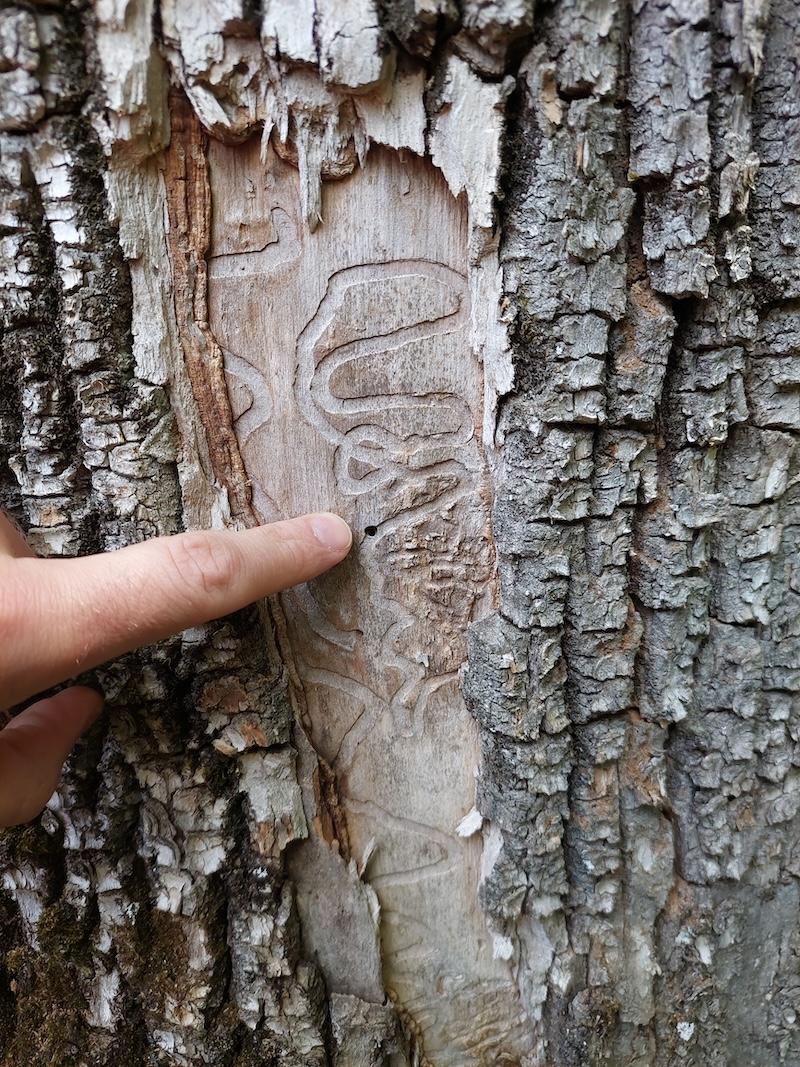
Serpentine galleries and a D-shaped exit hole visible on the cambium layer beneath the bark.
It surely seems like we found a lingering ash tree, one that survives an EAB infestation when nearly all the ash around it have died. We will continue monitoring this tree annually to find out for sure. We also have high hopes for potential lingering ash trees at Clearpool Model Forest in Carmel, NY and Siuslaw Model Forest in Acra, NY.