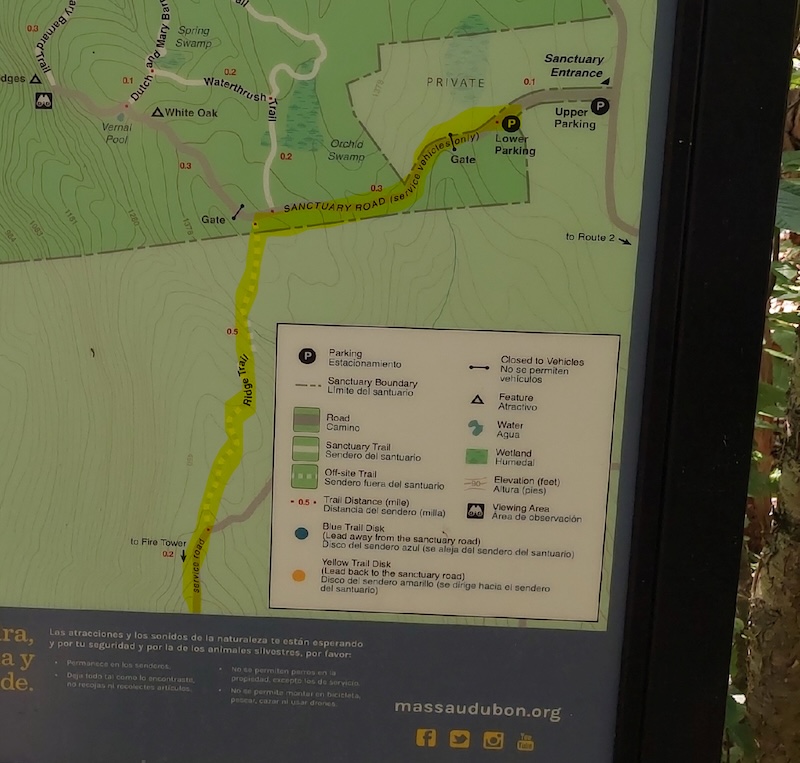
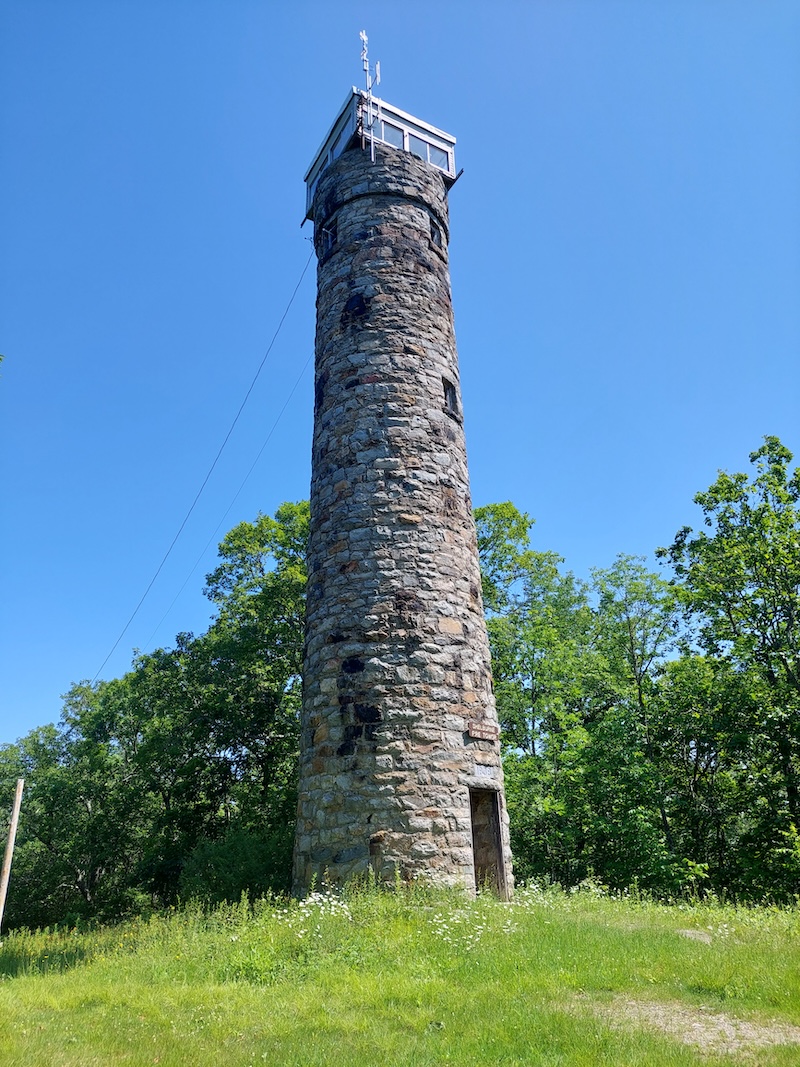
In June 2025, Jess and I hiked to the Shelburne Falls, Massachusetts Fire Tower on Massamet Mountain (elevation 1591 feet). We started at the Mass Audubon High Ledges Sanctuary trailhead off Patten Road. We followed Sanctuary Road west to Ridge Trail, which heads south to a service road that takes you to the fire tower. The one-way distance is about a mile of moderately difficult hiking.
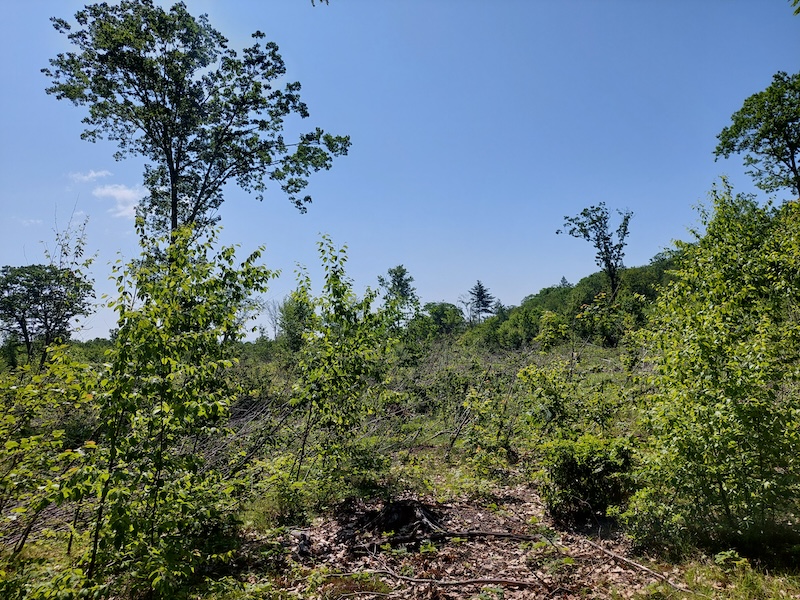
Along Ridge Trail, you can see some heavy timber harvests. By heavy, I mean that most of the trees were removed except for some maturing northern red oak. Some of the oaks looked like good wildlife trees and some looked like good lumber trees. The first harvest we came to on Ridge Trail looked to be more recent, maybe 5 years old or less. It looked like some of the regenerating trees were run over and chopped with a machine. I think the harvest type was a seed tree cut.
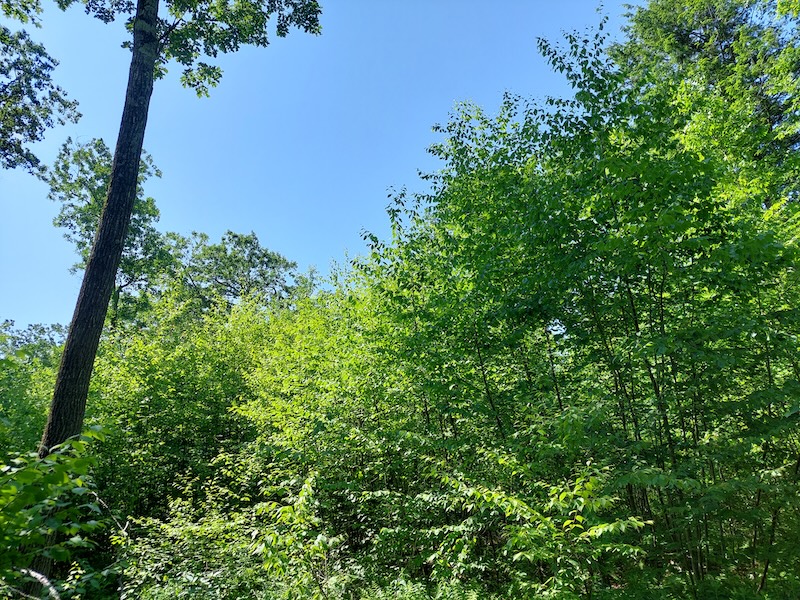
As we walked further south on Ridge Trail, the regenerating trees were taller and the cover was thicker indicating that the harvest(s) were a bit older. There were also more of the mature trees left standing. Some of them were white oak. I think this harvest type was a shelterwood cut. I tried to identify the regenerating trees. I scratched a stem and it smelled minty. Birch! I don’t know if it was yellow or black birch.
It was interesting to me to see the heavier harvests, harvests of different ages, and to visualize forest succession taking place. We also saw some southern tree species, like white oak, shagbark hickory, and young American chestnut.
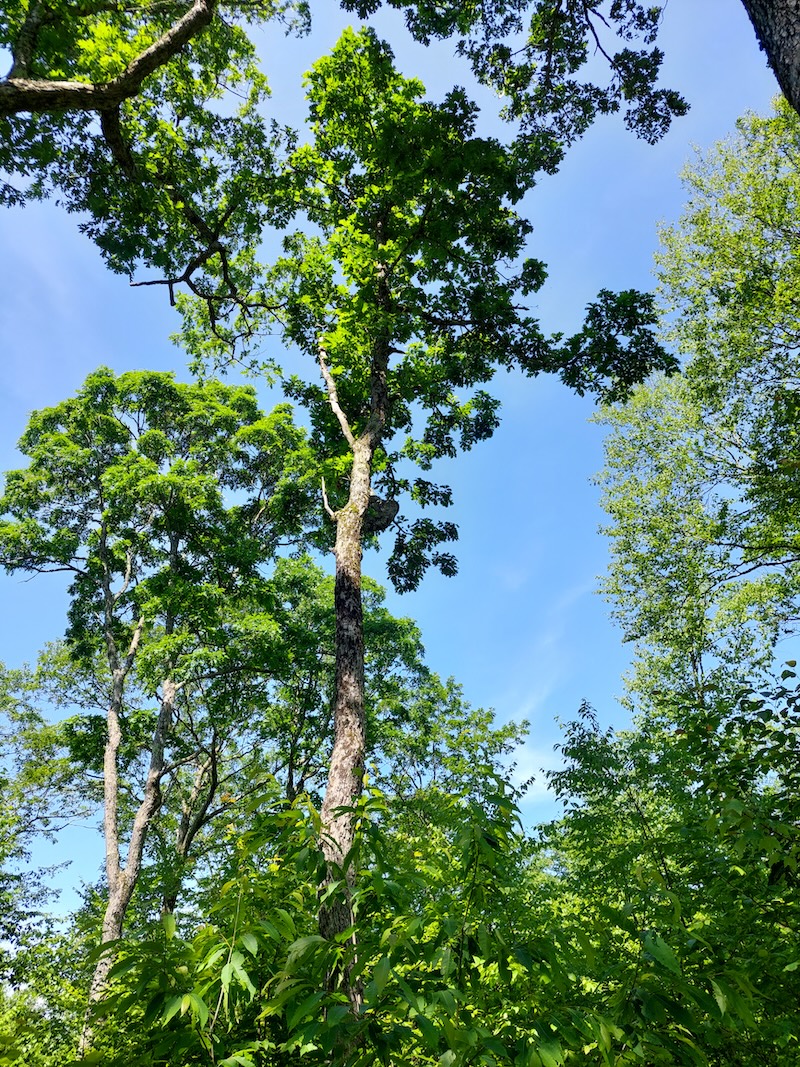
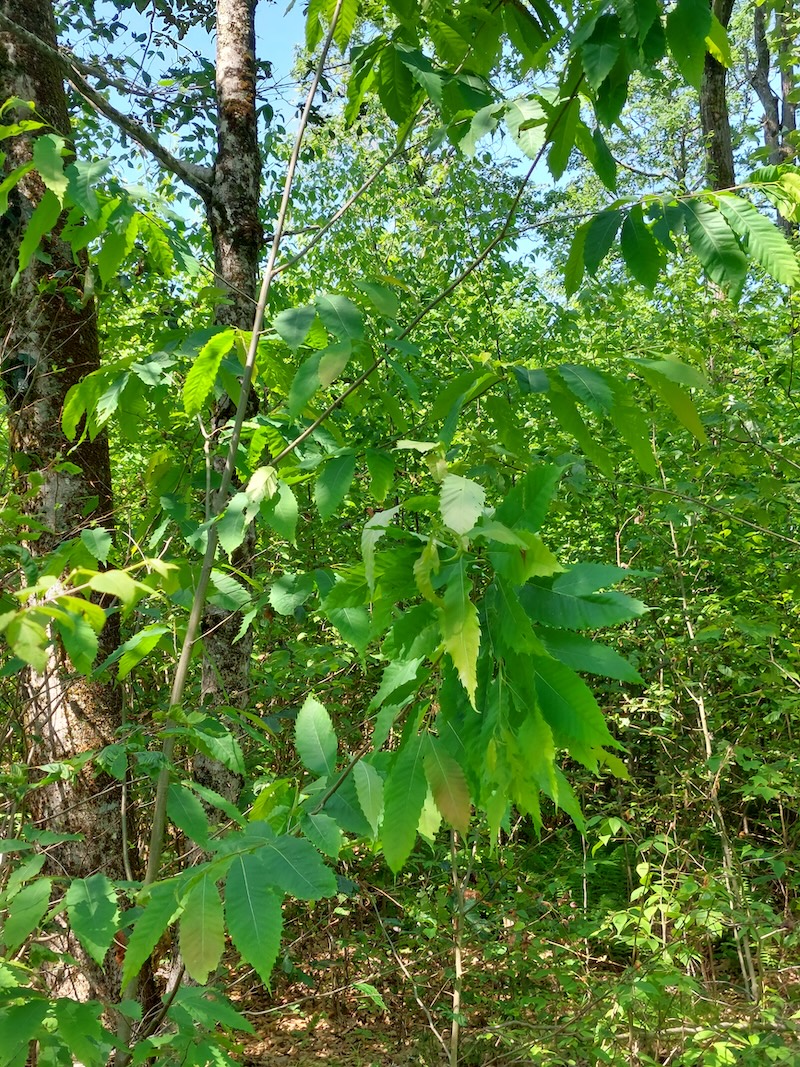
We saw a lot of wildlife too. White-tailed deer (of course), eastern towhee, woodcock, and ovenbird. I pulled up the Merlin Bird app and used its Sound ID feature. We heard the call of a black-throated blue warbler, the same bird we are planning to create habitat for at the Lennox Model Forest in Delhi, NY.
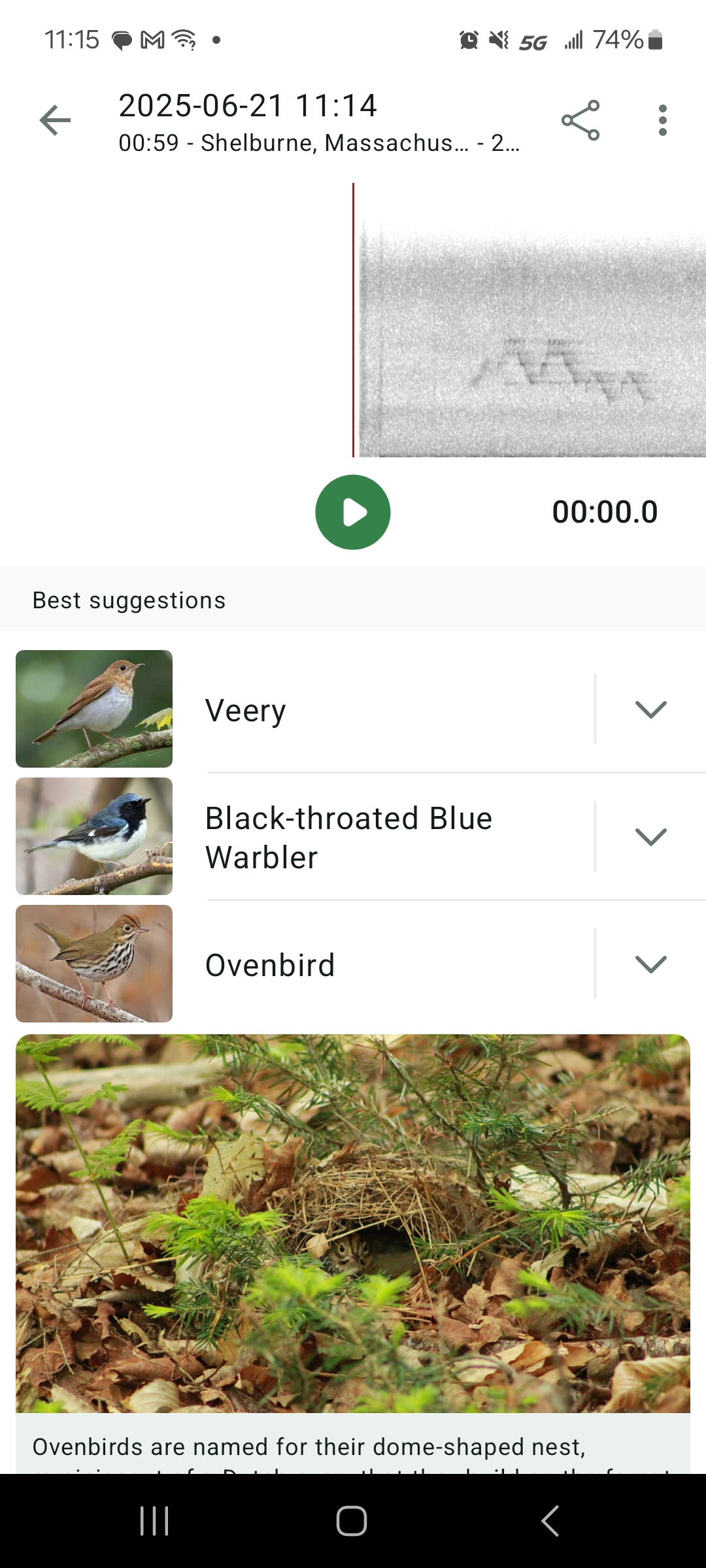
Much of the wildlife that we saw and heard requires young woods for forage, cover, breeding, or rearing. Landowners can create young woods habitat, which is relatively rare on the landscape, by doing heavier timber harvests like patch, seed tree, and shelterwood cuts. If you want to learn more about young woods habitat, check out this link on MyWoodlot.com. Thanks for reading.