Have you ever done a scavenger hunt where anything you can find is on the list?
Tilly Foster Farm sits on just under 200 acres of farm and forest land in Putnam County. The farm is owned and operated by the county, and the Watershed Agricultural Council holds an easement on Tilly Foster to protect it in perpetuity from development. Hiking trails, farm animals, public events, and locally grown food draw visitors here every day.
One sunny day in August, visitors were invited to explore an emerging attraction: the newly established Restore and Regenerate (R&R) Forest. The R&R Forest is a part of Tilly’s woodlands that’s intentionally being used for food production, outreach, and education, all through the lens of forest stewardship. Grants from New York State, as well as private and public partnerships, are supporting Putnam County Cornell Cooperative Extension (PCCE) as they expand this project. To engage visitors with this forest, Jen Lerner, Senior Resource Educator at PCCE, and Mike Cohn, Executive Director of Soldiers2Scientists, organized a bio blitz.
So, what’s a bio blitz? It’s an event in a specific location where people try to observe and identify as many organisms as possible in a set amount of time. Bio blitzes are group data collection efforts, making them a perfect fit for Soldiers2Scientists, whose mission is to expand veteran participation in citizen science projects.
The goal of this bio blitz was to give a baseline of the species currently found in the R&R Forest. This data can then be used to understand the success of stewardship activities in the future or provide a map of where certain projects should take place, like invasive species control or game camera establishment.
To participate in the bio blitz, Jen and Mike first made sure I was set up with iNaturalist. iNaturalist is a phone app which logs species observations in real time based on your location, and it’s where I’d be recording all the species I could find. iNaturalist can offer identification suggestions based on the pictures you upload, but you or other users can also suggest your own identification ideas. This feature makes it popular for bio blitzes because it’s user friendly to both budding naturalists and biology experts.
Tilly Foster Farm has a lot of invasive species, many of which had already been recorded by the time I got there, so I challenged myself to catalog something new. Finding repeat populations of an already spotted species is valuable data, but I was still hoping to find a rare plant, fungus, or insect. At first, I thought my odds of succeeding were slim due to the pressure of invasive species in the forest. There are some stretches of trail where almost all the trees are dead ash, killed by the invasive emerald ash borer. When the ash trees died, light flooded the forest floor and invasive bittersweet, multiflora rose, privet, and barberry grew rapidly in response. With no natural predators to keep their populations in check, they outcompeted, shaded out, and displaced many of our native understory plants, like in the picture below.
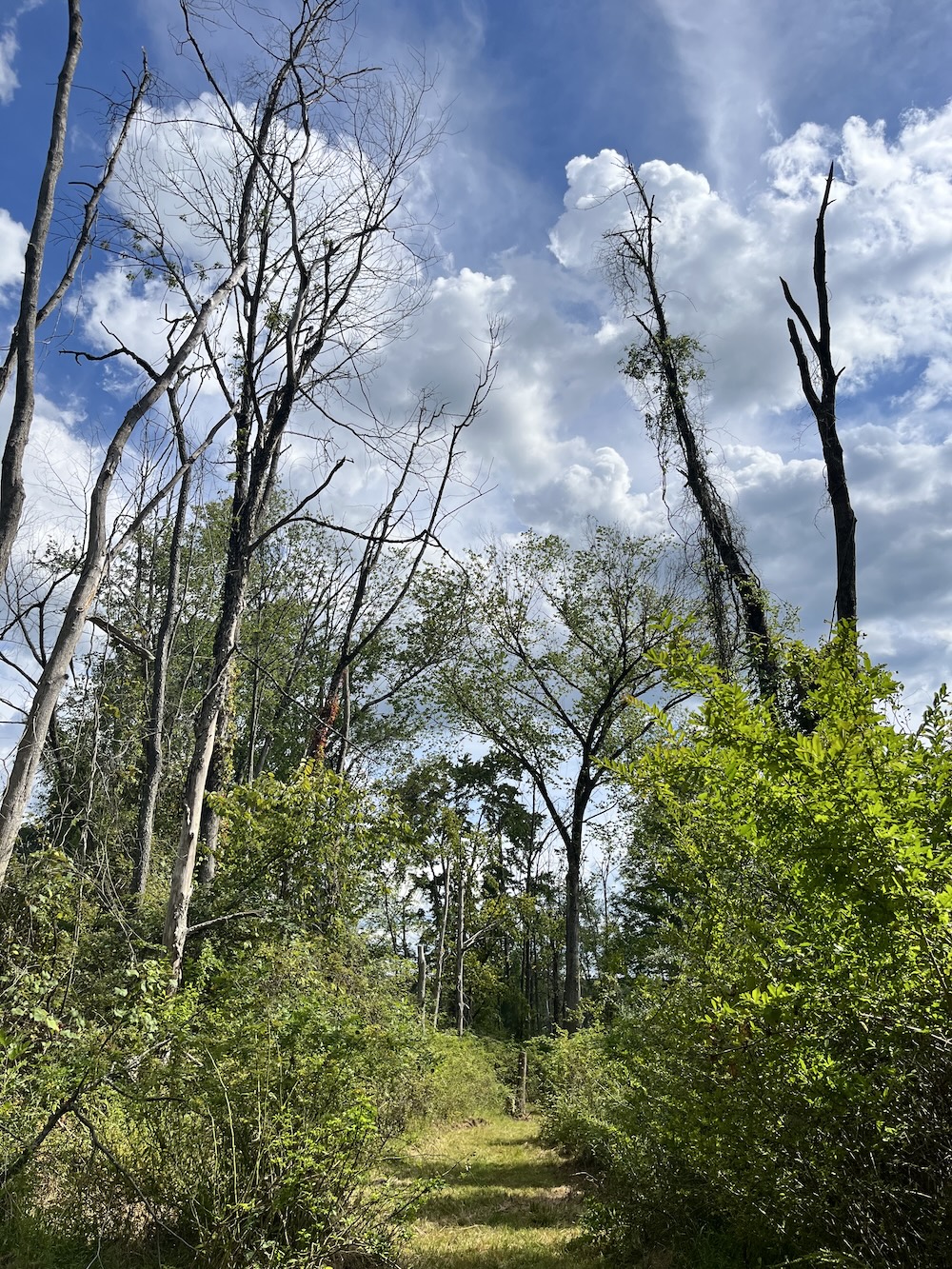
Despite some difficult growing conditions, I’m happy to say there were still plenty of other species left to observe, many of which were native:
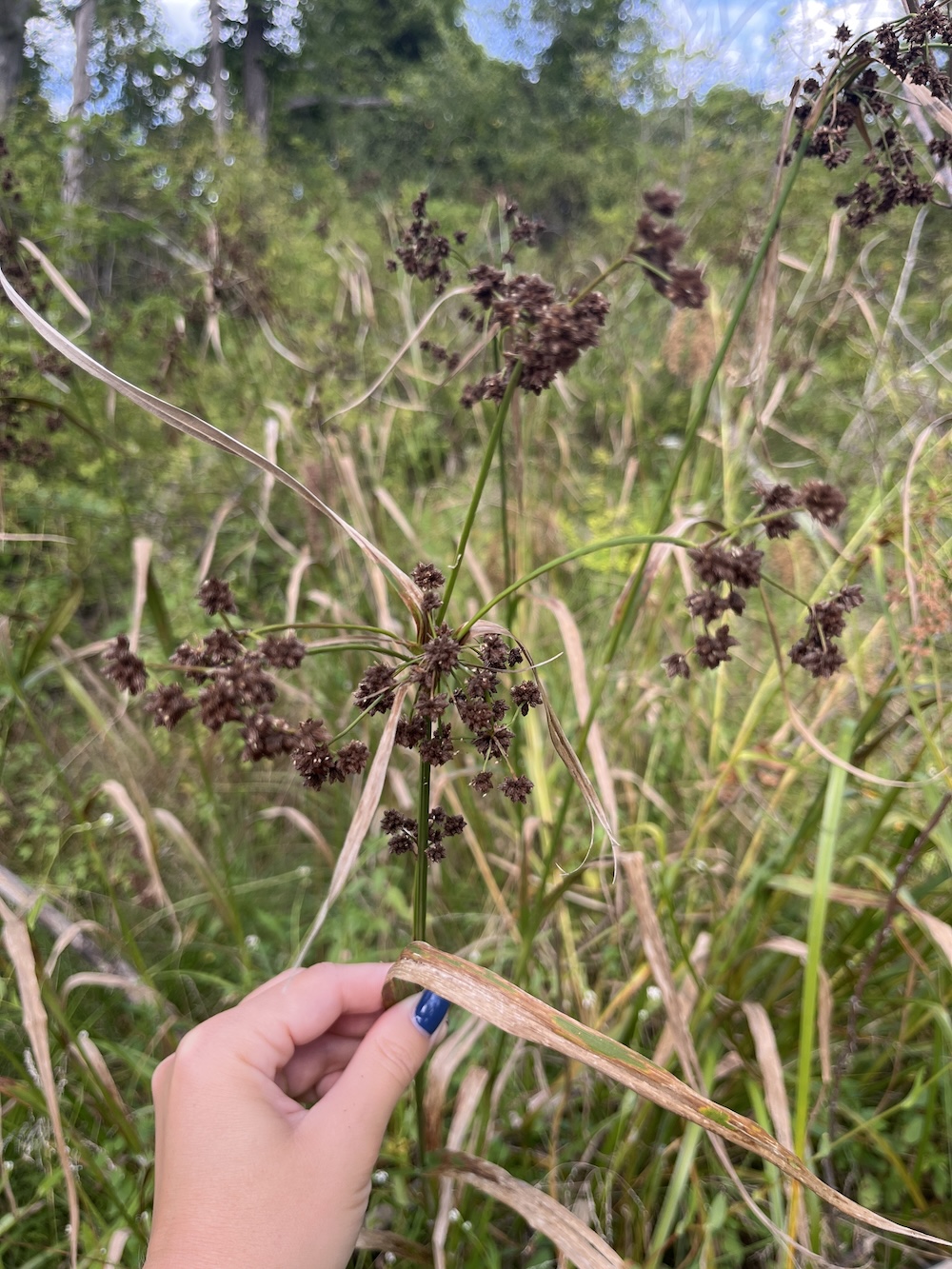
This is one of New York’s bulrushes, which is a type of sedge. There are a few bulrush species that are hard to distinguish, but this is probably a type of Scirpus.
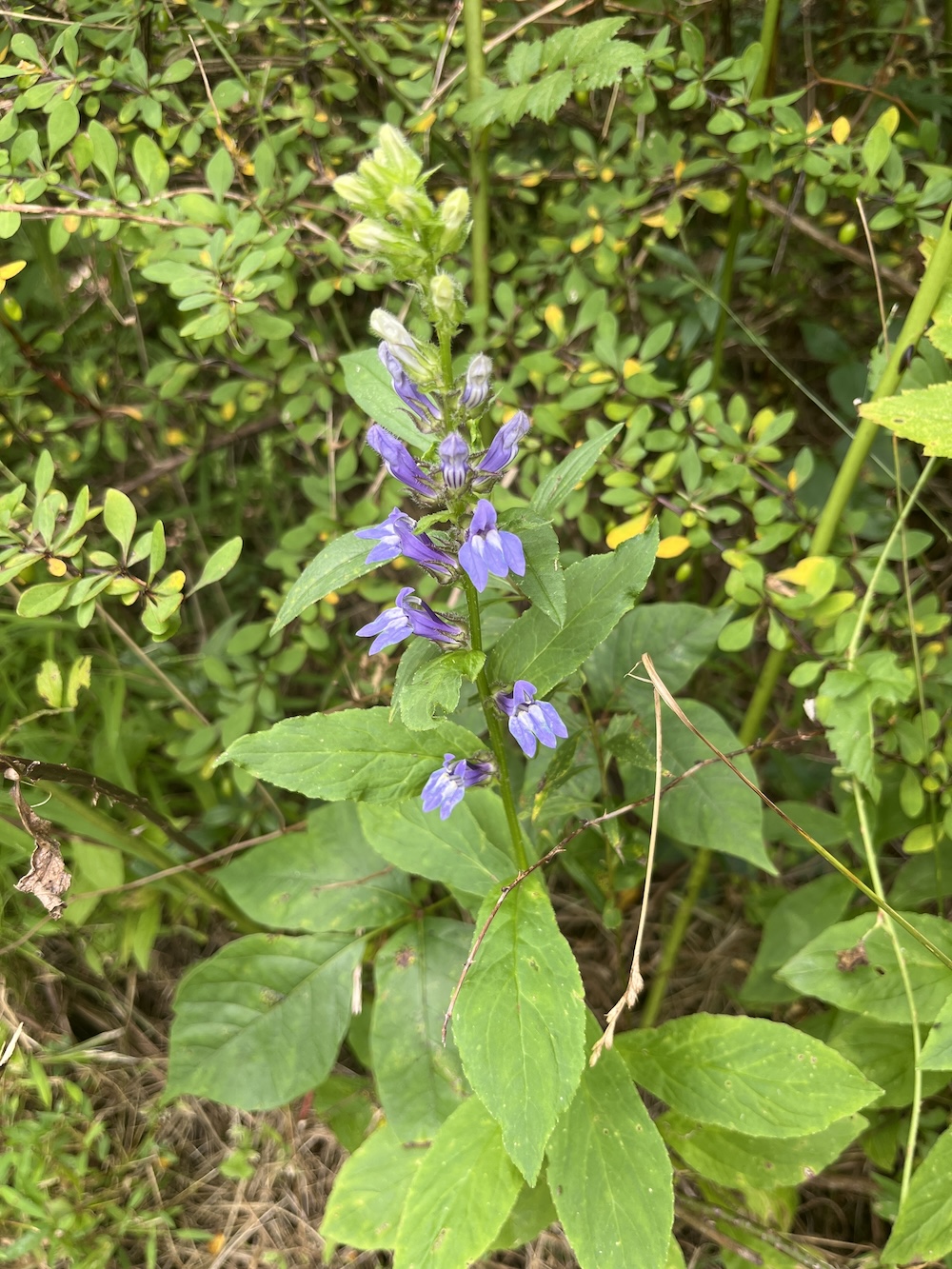
Great blue lobelia (Lobelia siphilitica) had beautiful flowers on display. These flowers are designed to take advantage of visiting bees by spreading pollen on their backs.
Among the plants were also signs of animal activity:
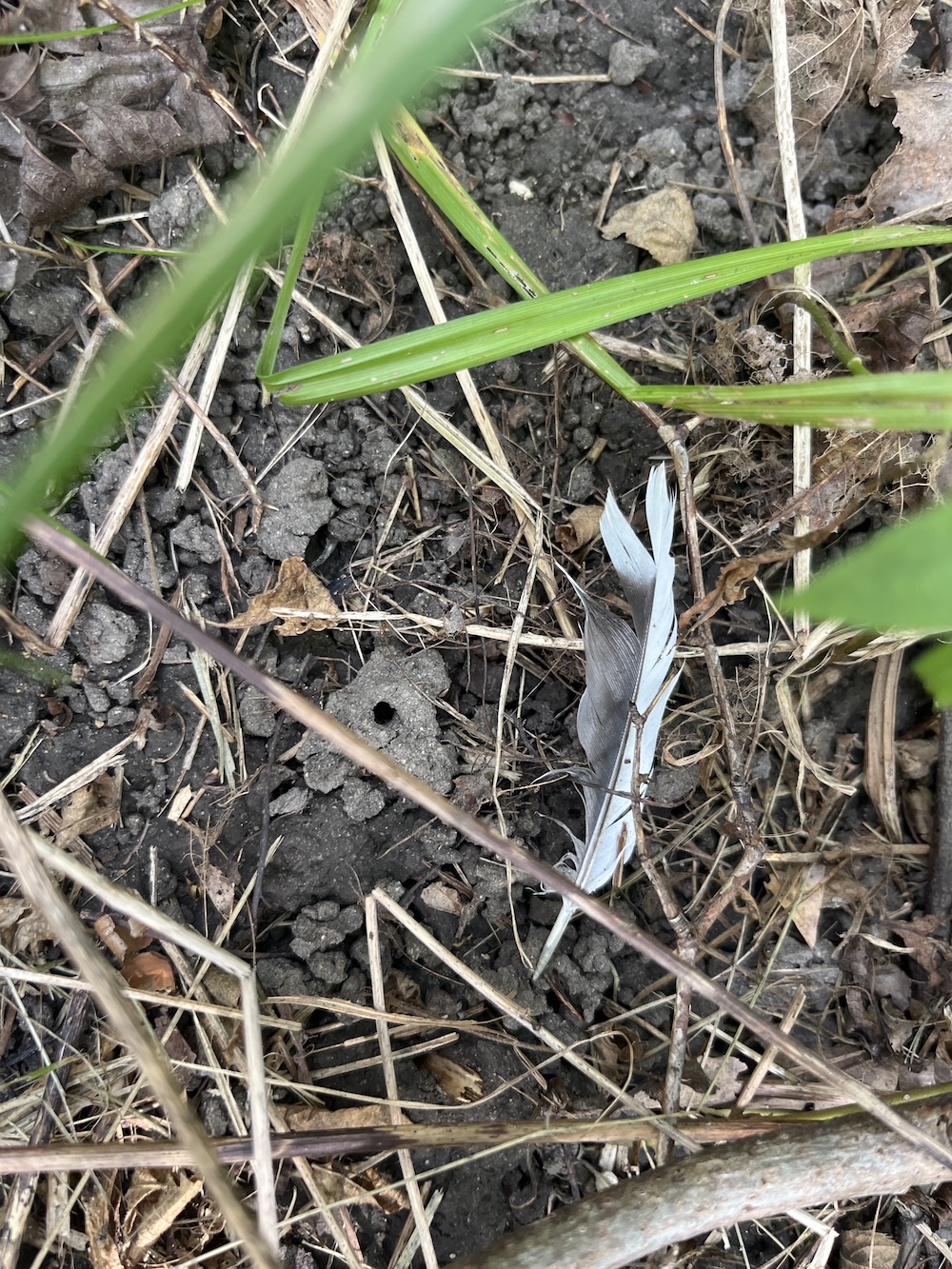
I observed what appears to be a mourning dove (Zenaida macroura) secondary wing feather…
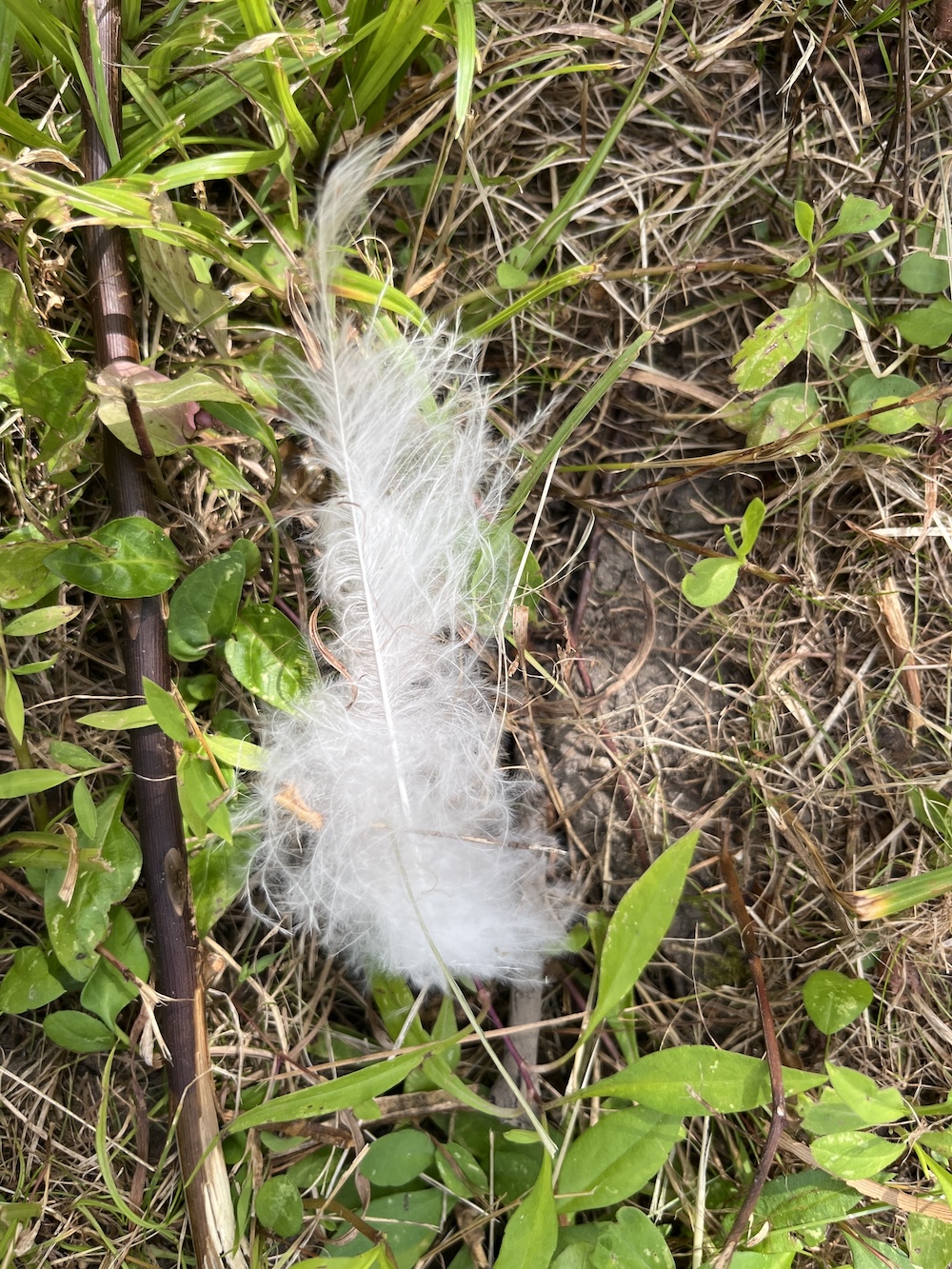
…and a white chest feather from a great horned owl (Bubo virginianus).
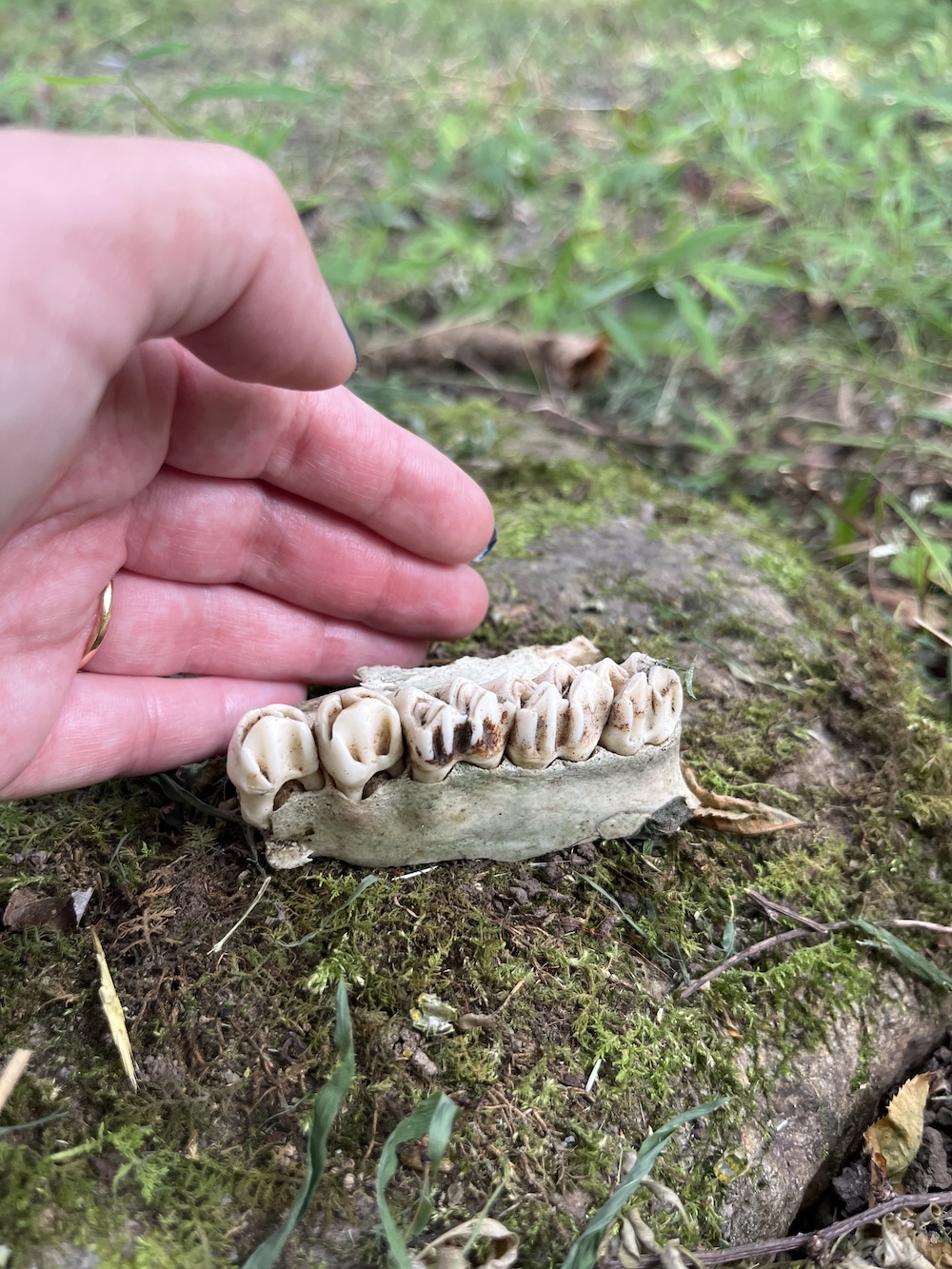
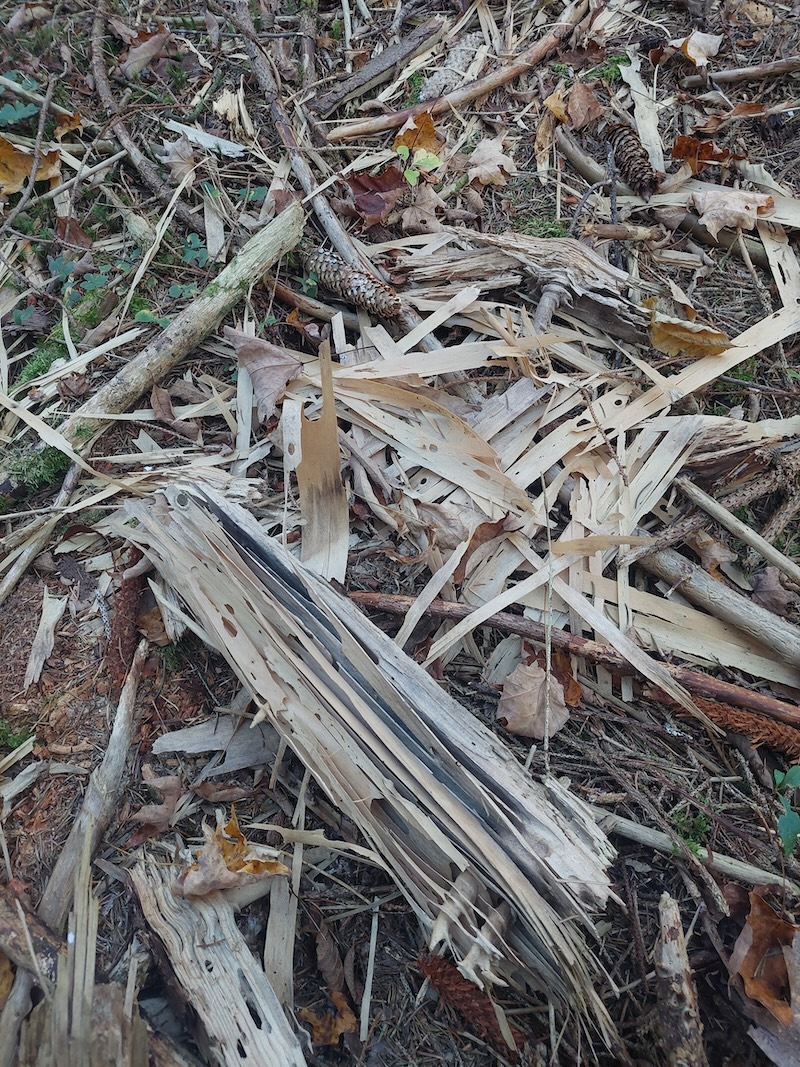
After much debate amongst bio blitz attendees, we eventually decided this bone fragment was from the bottom jaw of a white-tailed deer (Odocoileus virginianus).
While making my way back to the trailhead, a leaf on a low branch caught my eye. This was a leaf shape I’d only seen a few times in the wild, due to an invasive blight that wiped almost all these trees off the map:
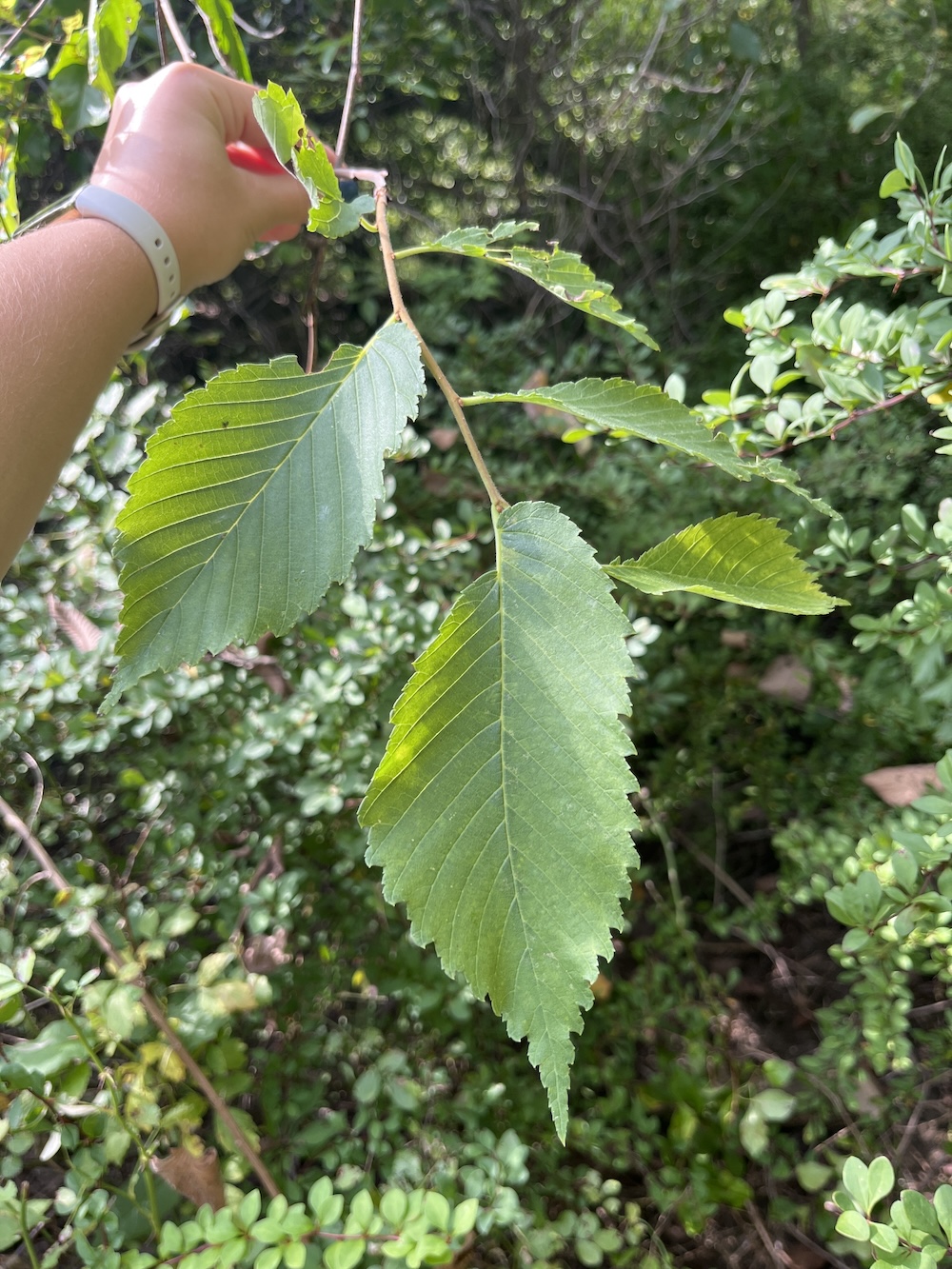
An American elm tree (Ulmus americana) was growing amidst the barberry- a rare find indeed! Now truly satisfied with my observations, I made my way out of the woods. I caught up with friends at the trailhead, where PCCE and Soldiers2Scientists had set up a booth to greet visitors, and we talked about all the observations logged that day. In total, 13 observers made 340 observations of 172 species. Only 12 of those observations and 7 of those species were made by me, highlighting how much of a community effort a bio blitz is.
Participating in the bio blitz at Tilly Foster Farm forced me to not only slow down but also look down. Working in forestry, I’m usually peering up into the trees. As a result, I can miss a lot of the little things, like flowers thriving in pockets of light in the understory or the colorful mushrooms poking up out of soil and decaying wood. I was able to really take my time as I meandered the trails, noticing as many details as I could about the variety of life I encountered.
If you want to do your own bio blitz, we’ve got information on MyWoodlot about how to identify plants and animals. If you’d like to participate in a public bio blitz or other community science efforts, keep an eye on the MyWoodlot events calendar for one happening near you. To learn more about Soldiers2Scientists visit their website here.